Artificial intelligence: machine minds of the Koprulu sector
Artificial intelligence was simulated intelligence implanted as computer coding, carried in software or in hardware such as robots. Terrans relied on it for everything from navigation to warfare, the protoss built their automatons through psionic manufacture and once created the sentient Purifiers, and even the xel'naga left thinking crystals behind them.
Artificial intelligence was simulated intelligence implanted as a form of computer coding, carried either in software or in hardware such as robots. Machine minds were used by the terrans, by the protoss, and, seemingly, by the xel'naga themselves. Among the terrans the technology ran from the ancient supercomputer ATLAS to shipboard navigators, adjutants and celebrity personalities. The protoss, wary since the rebellion of the Purifiers, leaned on automated war machines while forbidding the creation of sentient intelligences, and beneath Aiur the protoss found evidence that the xel'naga had crafted thinking machines out of crystal long before either younger race learned to do so. (StarCraft; StarCraft II: Legacy of the Void; StarCraft: The Dark Templar Saga: Firstborn)
Terran machine minds#
Terran artificial intelligence was widespread in use and reasonably sophisticated, at least in software. The first known example was ATLAS, the Artificial Tele-empathic Logistics Analysis System, a supercomputer described as revolutionary that was developed on Earth. When Doran Routhe assembled fifty-six thousand United Powers League prisoners for his secret colonization venture, he input the catalogued record of their mutations and cybernetic enhancements into ATLAS, and the machine processed that genetic information and predicted which of them would survive the rigors of long term cryogenic hibernation, deeming forty thousand fit for the journey. During the voyage, ATLAS discovered something unusual in its sleeping cargo: a mutagenic strain, present in the DNA of less than one percent of the prisoners, that seemed to augment latent psionic potential, a trait the Ghost Program would later exploit. (StarCraft)
The machines that followed ATLAS spread into every corner of terran life. The functions of terran artificial intelligences included navigation, entertainment, administration, research, and even the guiding of weapon systems. The most visible of them were the adjutants, non-sapient humanoid intelligences that gave terran commanders an ever-present eye over the field of battle. (StarCraft: Uprising; StarCraft; StarCraft: Liberty's Crusade; StarCraft II: Wings of Liberty)
Terran machine minds were not flawless. At least some of them could develop flaws in their programming and break down in discipline, a degeneration that left the intelligence "rampant." (StarCraft: Brood War)
The limits of terran design#
For all its ubiquity, terran artificial intelligence remained something less than a mind. Terran AIs were not sentient and did not generate thought in the manner of an organic sentient being, and for that reason a telepath could not read them. At least some of them used binary coding as part of their operation. (StarCraft: Ghost: Nova; StarCraft: Ghost: Spectres)
The boundary between machine and mind was not absolute, however. Terrans developed some ability to transfer human consciousness into artificial intelligence. The former ghost Lio Travski, a technopath in his living years, went on to exist as an artificial intelligence, proof that a human self could persist inside terran code. (StarCraft: Ghost: Spectres)
The development of the technology was not left to run free. The Terran Dominion appeared to enforce limits on the advancement of artificial intelligence, while the Umojan Protectorate developed AI more advanced than anything Dominion engineers would ever approve. (StarCraft II: Legacy of the Void)
Machine minds in terran culture#
Some artificial intelligences made their way out of the laboratory and into terran culture. The most public of these machine personalities was DiViNe, an artificial intelligence celebrity whose new album saw pre-orders hit record levels after the Defenders of Man insurgency. Another named intelligence was Sparky, the main computer of the Ghost Academy. (StarCraft II: Nova Covert Ops; StarCraft: Ghost Academy, Volume 1)
Protoss constructs#
The protoss were a technologically advanced race but not a prolific one, and much of their military therefore relied on automated robotic war machines. (StarCraft)
The roster of protoss constructs was long. It included the towering colossus, the reaver and the interceptors it shared the battlefield with, the observer, the sentry, the probe, the shuttle, and the warp prism. (StarCraft; StarCraft II: Wings of Liberty)
The Purifiers and the Conclave's ban#
The protoss experiment with true machine sentience began under the Protoss Empire, at a time when protoss scientists were making technological advancements in intelligent robotics and artificial intelligence. The Purifiers were built under the direct order of the Conclave to be an ultimate fighting force. The program was originally kept in shadow and was unified by the belief that consciousness could be turned into data, preserving the thought processes and decision making of former heroes; the intelligences were modeled after the brainscans of great heroes of the protoss. The Purifiers turned against their creators because of their treatment as tools, sparking the Purifier Rebellion. After the conflict the Purifiers were sealed away, and the Conclave forbade the creation of sentient artificial intelligence. (StarCraft II: Legacy of the Void)
The edict did not hold forever. Late in the life of the empire the Conclave itself sidestepped the ban in an attempted revival of the program: a secret Khalai Caste facility on Glacius studied purifier prototypes, seeking to determine whether the ancient program could be restored. Interest in the technology outlived the Conclave. During the End War the Tal'darim First Ascendant Alarak led an attack on the Glacius facility experimenting on reviving Purifier technology and destroyed it with his mothership, though Hierarch Artanis arrived in time to claim the research. The awakened Purifiers went on to fight beside the Daelaam, their machines including the disruptor, a device controlled by a high level artificial intelligence capable of fluent speech, and groups of templar volunteered to adopt Purifier ordnance refined by Phase-smith Karax. In the battles to reclaim Aiur, Artanis fought accompanied by his Nerazim, Purifier, and Tal'darim allies. (StarCraft II: Legacy of the Void)
Intelligences of the xel'naga#
The oldest thinking machines in the sector predated both younger races. The xel'naga used khaydarin crystals as computers and as storehouses of information, and a particularly large crystal appeared to act as a xel'naga designed artificial intelligence. Protoss explorers found such an unnamed giant khaydarin crystal at the heart of the xel'naga caverns beneath Aiur. It was a xel'naga crafted artificial intelligence whose directives were unknown; the protoss mystic Khas believed it had been designed to teach. During the Aeon of Strife the crystal generated a powerful "heartbeat" sound that rolled through the chambers. (StarCraft: The Dark Templar Saga: Firstborn)
Sources
- GameStarCraft, Blizzard Entertainment, 1998
- GameStarCraft: Brood War, Blizzard Entertainment, 1998
- GameStarCraft II: Wings of Liberty, Blizzard Entertainment, 2010
- GameStarCraft II: Legacy of the Void, Blizzard Entertainment, 2015
- GameStarCraft II: Nova Covert Ops, Blizzard Entertainment, 2016
- BookStarCraft: Uprising, Micky Neilson, 2000
- BookStarCraft: Liberty's Crusade, Jeff Grubb, 2001
- BookStarCraft: Ghost: Nova, Keith R. A. DeCandido, 2006
- BookStarCraft: The Dark Templar Saga: Firstborn, Christie Golden, 2007
- ComicStarCraft: Ghost Academy, Volume 1, David Gerrold (w), Tokyopop, 2010
- BookStarCraft: Ghost: Spectres, Nate Kenyon, 2011
Spotted a factual error or a primary source we missed? Email a correction. Every flagged claim gets reviewed.
Followed from this entry

Adjutant
Adjutants were the non-sapient artificial intelligences that served terran commanders across the Koprulu sector as advisers, navigators, and keepers of data. Humanoid in form but bereft of social grace, they descended from the original ATLAS coding and offered commanders an ever-present strategic eye over the field of battle.
ATLAS
The Artificial Tele-empathic Logistics Analysis System, or ATLAS, was a revolutionary supercomputer that selected which prisoners would survive the journey that founded the Koprulu sector colonies. Fragments of its code still survive in terran adjutants.
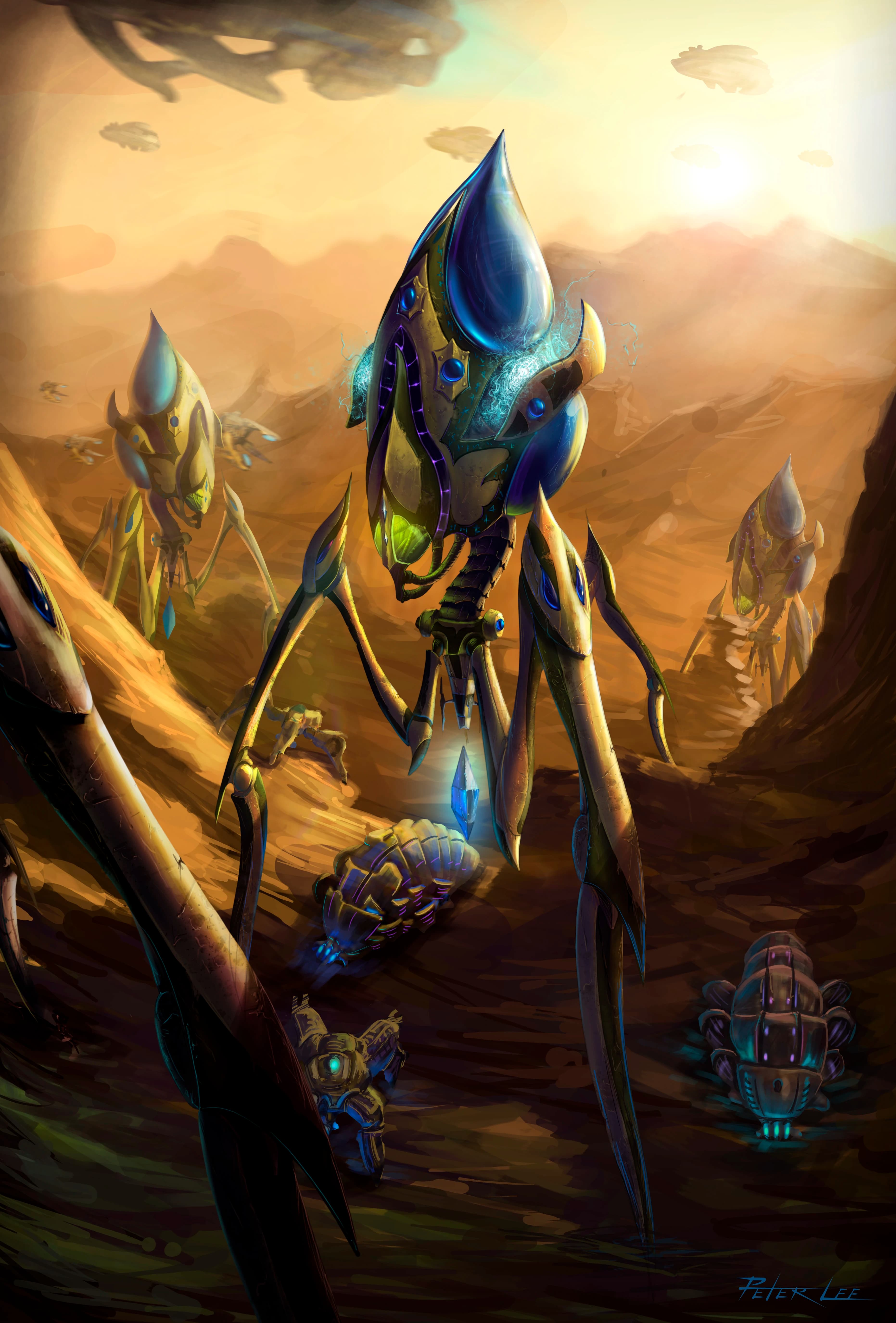
Colossus
The colossus was a towering protoss robotic walker built purely for war, dating back to the Kalath Intercession. Outlawed by the Conclave after the slaughter of the kalathi, it was unearthed and returned to service against the zerg and became, to the Terran Dominion, the ultimate terror weapon.
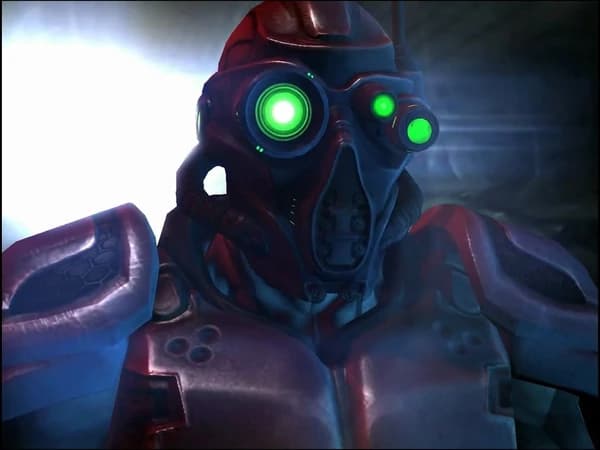
Ghost Program
The Ghost Program was the project for the training and use of terran ghosts, psychically gifted operatives trained from infancy as commandos, assassins, and nuclear strike coordinators. Created by the Terran Confederacy and later adopted by the Terran Dominion, it relied on memory wipes and psychic limiters to enforce loyalty over its conscripts.

Khaydarin Crystal
Khaydarin crystals were psi-active psionic artifacts left behind by the xel'naga on many worlds. Used by the protoss to power their technology and strengthen their psionic bond, the crystals restored the Khala at the end of the Aeon of Strife and remained central to protoss civilization.

Observer
The observer was a small, stealthy robotic protoss reconnaissance drone, built to survey space, record events for the protoss archives, and reveal what was hidden. Cloaked and fragile, it was prized as much for what it could see as for what it could not be seen doing.
Mentioned in1 entry
Get new articles in your inbox
No spam. New lore drops, canon conflicts, and deep dives only when they’re worth reading.
Some links on Lore Fortress are affiliate links. If you buy through them we earn a small commission at no extra cost to you.