Worm Riding and Maker Hooks: the Fremen Art of the Sandrider
Worm riding was the Fremen art of summoning, capturing, and riding the giant sandworms of Arrakis. Practiced with thumper and maker hooks, it turned the most feared creature of the desert into transport, weapon, and sacrament, and even Paul Atreides could not be truly accepted among the Fremen until he had ridden.
Worm riding was the art of riding a sandworm, and it belonged almost wholly to the Fremen of Arrakis. To every other people of the Imperium the great worms were death itself, territorial monsters that breached the sand to devour anything that moved in rhythm upon it. The Fremen alone achieved mastery over the beasts, and they turned that mastery into the foundation of their life in the deep desert. A rider capable of capturing and steering one of the makers was called a sandrider, and the trial that made a youth into a sandrider was among the most important passages of Fremen life. Paul Atreides himself could not be fully accepted into the tribe until he had passed it. (Dune)
The art and its technique#
The technique of worm riding exploited two facts of the sandworm's nature. The first was that the worms were drawn to rhythmic vibration on the surface, breaching in defense of their territory to seek out its source. The second was that the worm's thick, semi metallic skin, an armor of overlapping and interlocking scales each a few feet across, could be pried apart at the edges. (Dune)
A rider began by planting a thumper, whose repeated pounding summoned a worm to the surface. As the maker passed, the waiting Fremen pried open the edge of a scale with a maker hook and let sand sift into the soft flesh beneath. The intrusion caused the beast intense irritation, and it rolled its body until the opened scale stood at the highest point above the desert floor, where the least sand could enter. A Fremen poised at the right place as the scale rolled upward could mount the worm's back, and so long as the scale was held open the worm would not submerge. Further hooks placed toward the front of the creature, near its mouth, controlled its lateral movement; a pull on the hooks forced the maker to turn. The worm was ridden until it grew too exhausted to continue, at which point the hooks were released and the beast was allowed to sink back beneath the sand. (Dune)
Tools of the rider#
Two devices made the art possible, and both were counted among the essential contents of the fremkit. The thumper was a short stake fitted with a spring loaded clapper at one end; once its catch was released it pounded the sand in a steady rhythm until a worm answered. Some thumpers carried a candle that burned for roughly an hour before releasing the catch, letting a rider set the summons in advance and stand well clear. (Dune; The Dune Encyclopedia)
Maker hooks were long, narrow shafts ending in a barbed hook, used to lift the leading edge of a scale and hold it open. Recorded specimens ranged from about 1.35 to 2.1 meters in length, sized to the beast and the rider, with the grip end molded and roughened for a sure hold. Though reserved for wormriding, the hooks could serve as improvised melee weapons in an emergency. The Fremen were strict practitioners of the Amtal Rule, and every design of thumper and maker hook, and every piece of material in them, was tested until it was destroyed, for on such equipment the life of the tribe depended. (Dune; The Dune Encyclopedia)
Origins of the art#
Fremen memory preserved more than one account of the first rider. In the expanded Legends of Dune novels, set in the age of the Zensunni wanderers, the first sandrider was the outlaw Selim, a youth exiled from his sietch for a water theft he had not committed. Alone in the desert, Selim learned that if the segments of a worm's skin were separated, the beast would roll to keep the open wound away from the abrasion of the sand. Riding at first with nothing but a small metal rod, he stayed aboard an ancient worm until the creature died beneath him, and in later rides he learned to release the worms alive while he scurried to the safety of nearby rock. As Selim Wormrider he gathered a band of followers who became the first wormriders, held the worms to be godly, and raided the spice convoys of the settled Zensunni, returning the melange they seized to the desert. (Dune: The Butlerian Jihad)
The Dune Encyclopedia instead placed the first ride in 7265 AG and named a Fremen called Rothar, who was caught in the open when a great worm rose beside his party, seized the leading edge of a ring segment, and was carried off across the desert when the worm rolled him high upon its back. Within days the first crude maker hooks had been fashioned, and volunteers from every sietch set out to become sandriders. The refined techniques were bought with the lives of many of the earliest practitioners, but within a generation the Fremen's means of travel was firmly established. (The Dune Encyclopedia)
The rite of the sandrider#
Fremen ordinarily became sandriders by the age of twelve, and in The Dune Encyclopedia's account the first summoning of a maker was governed by ritual developed over centuries. The naib of the youth's sietch accompanied him to the sand with a party of men and a Sayyadina. The naib spoke the words of the rite, and the men loaned the boy thumper and hooks, for it was held to be ill luck for one not yet a rider to own such things. The Sayyadina stood aloof from the proceedings and observed, so that the events of the day would be properly recorded. Once the ways of the worm were well understood, most boys succeeded, though failure could be fatal; in the Legends of Dune novels the young rider Biondi of Selim Wormrider's band, who insisted on his test before his training was finished, faltered at the sight of the approaching worm and fled. (The Dune Encyclopedia; Dune: The Butlerian Jihad)
A sandrider poised to catch a worm was called a Hookman, and one riding was called a Worm-Steersman. The chief rider bore the title Mudir, a Fremen word meaning governor, and held the privilege of commanding the steersmen. At his cry of "Haiiiii-yoh!", the command to action, the steersmen mounted behind him, followed by the witnesses, and they guided the monster at his calls of "Ach" for a left turn, "Derch" for a right turn, and "Geyrat" for straight ahead. Not even the naib would counter his orders until the ride had run its course. The young mudir was first on and last off, a dangerous position if the worm was still fresh and ready to turn on him when the hooks came free, and for that reason a first ride usually drove the worm nearly to exhaustion, leaving it far more eager to escape and rest than to attack. In the expanded novels, Stilgar was an untried wali of Sietch Umbu until he became a sandrider, and Liet-Kynes once summoned a giant maker and steered it across the sands in a race against his friend Warrick for the hand of Faroula. (Dune; The Dune Encyclopedia; Dune: House Atreides)
Muad'Dib and the wormriders#
The trial of the sandrider marked the limit of what an outsider could become among the Fremen. Paul Atreides had grown into a religious leader whose Fedaykin won victory after victory against the Harkonnens, yet to be truly accepted he still had to ride. Paul attempted the trial and succeeded, becoming a full member of Sietch Tabr. The Fedaykin squad leader Shishakli lent Paul his own maker hooks, since Paul, not yet a rider, owned none. The worm Paul summoned was long remembered when the greatest recorded sizes of the makers were discussed. His success created its own crisis, for many Fremen expected the new wormrider to challenge Stilgar for command of the sietch. Paul broke tradition instead and proclaimed himself the ruling Duke of Arrakis, taking power without killing his friend. (Dune)
The art the Fremen had built for travel then became a weapon of war. In the Battle of Arrakeen, after Atreides atomics blew a breach in the Shield Wall, the Fremen rode their sandworms through the gap under the cover of a great storm and broke the Sardaukar of the Padishah Emperor. (Dune)
Travel, distance, and the later ages#
Wormriding made the sandworms a widely used method of travel and a sacred one, for the Fremen revered the maker as Shai-Hulud, the Old Man of the Desert. Long distances came to be measured in sandworms, the span over which a single worm would carry its riders before growing too exhausted to continue and being allowed to submerge. A trip of twenty worms was reckoned far and difficult. (Dune)
The art outlived the Fremen of the old desert. Some fifteen centuries after the death of Leto Atreides II, the priesthood of Rakis discovered a village girl named Sheeana who could command the sandworms outright, and when the Honored Matres burned Rakis it was with Sheeana, a ghola of Duncan Idaho, and their leader Darwi Odrade that the Bene Gesserit carried a single surviving worm to Chapterhouse, keeping alive both the makers and the memory of those who rode them. (Heretics of Dune; Chapterhouse: Dune)
Sources
- BookDune, Frank Herbert, Chilton Books, 1965
- BookHeretics of Dune, Frank Herbert, G. P. Putnam's Sons, 1984
- BookChapterhouse: Dune, Frank Herbert, G. P. Putnam's Sons, 1985
- BookThe Dune Encyclopedia, Willis E. McNelly (ed.), Berkley Books, 1984
- BookDune: House Atreides, Brian Herbert and Kevin J. Anderson, 1999 (expanded universe)
- BookDune: The Butlerian Jihad, Brian Herbert and Kevin J. Anderson, 2002 (expanded universe)
Spotted a factual error or a primary source we missed? Email a correction. Every flagged claim gets reviewed.
Followed from this entry
Naib: leader of a Fremen sietch
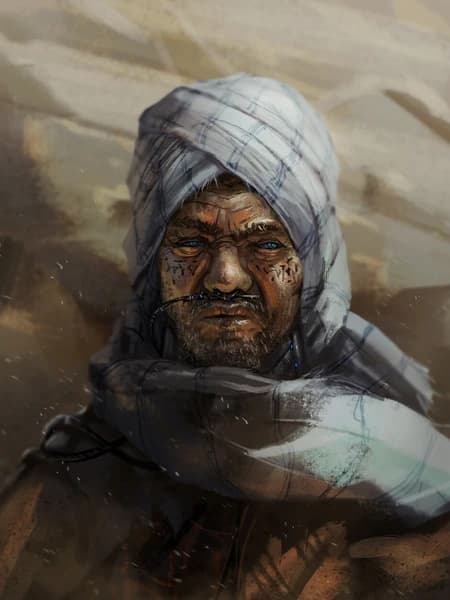
Naib was the Fremen title borne by the leader of a sietch. The word carried the meaning of one who had sworn never to be taken alive by the enemy, and in older usage it signified a servant of the sietch. By custom a man became Naib by fighting and killing the leader who came before him.
Sietch
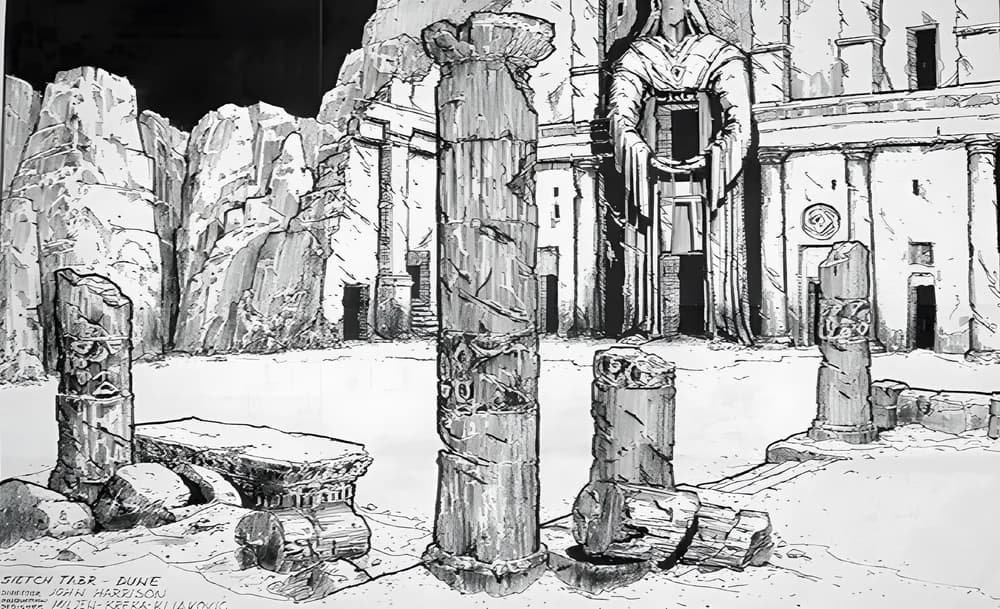
Sietch was the Fremen term for a community or village. Hidden within the rock outcrops and caverns of the deserts of Arrakis, a sietch was a self contained settlement housing hundreds or thousands of families and the industries that sustained them.
Zensunni
Zensunni was a mystical denomination of Buddislam that took root among disadvantaged and enslaved peoples across the known universe, above all the Fremen of Arrakis. Born of a schism around 1381 BG, it stressed the mystical and a reversion to the ways of the fathers, and was later steered by the Bene Gesserit.
Arrakis
Arrakis, known as Dune and later as Rakis, was a harsh desert world in the Canopus system and the only natural source of the spice melange. Home to the Fremen and the sandworms, it became the seat of the Atreides empire and the center of the known universe.
Fedaykin
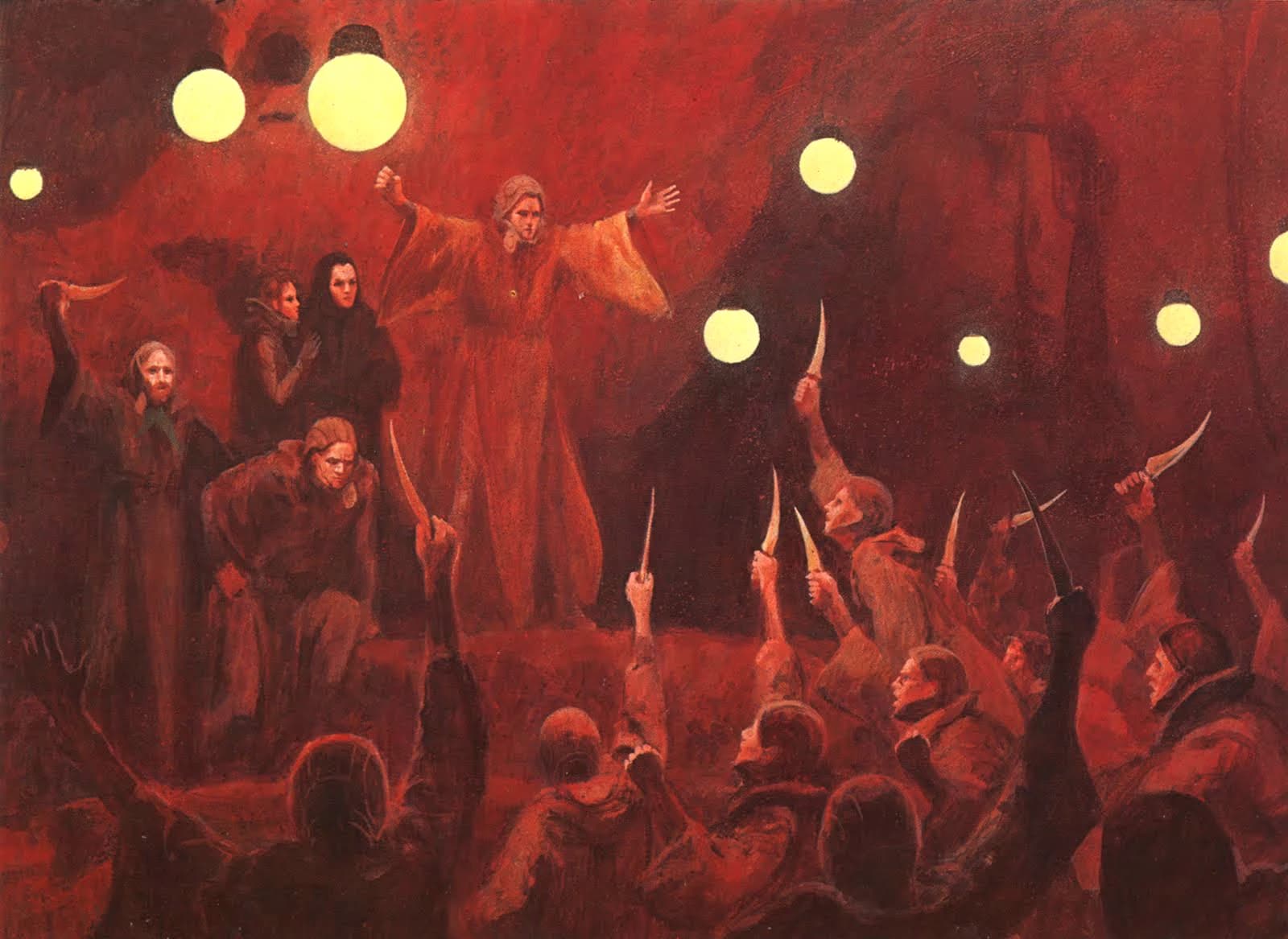
The Fedaykin were Fremen fighters of Arrakis, first the guerrillas of the Arrakis Revolt and then the personal death commandos of Paul Muad'Dib. By the time of his children they had become the elite of the Jihad army, before Alia Atreides dissolved them and the word returned to its old meaning.
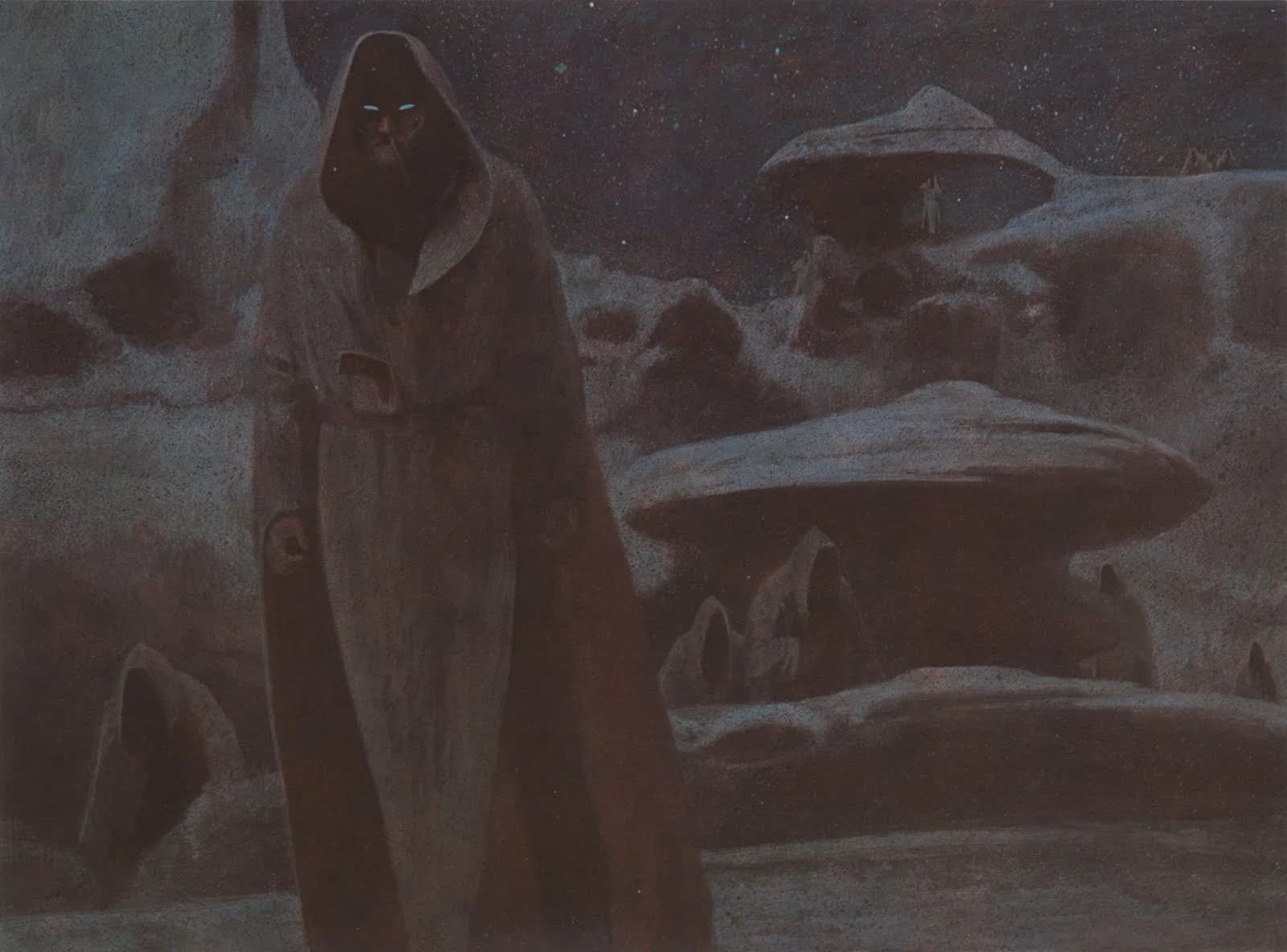
Fremen
The Fremen were a culture of humans descended from the Zensunni Wanderers who made the desert planet Arrakis their home. Hardened by water scarcity and generations of persecution, they became the finest fighters in the Known Universe and the foot soldiers of Paul Atreides and his jihad.
Mentioned in3 entries
Dune (1984 Film) Explained: Plot Summary, Ending and Book Differences
The full story of David Lynch's 1984 Dune in order, from Irulan's opening narration to the rain over Arrakis, with the ending explained and the biggest changes from Frank Herbert's novel, including the weirding modules.
Dune Ending Explained: the Book's Plot Summary and Final Chapter
The whole plot of Frank Herbert's Dune in order, from the gom jabbar on Caladan to the duel with Feyd-Rautha in Arrakeen, then a plain explanation of the final chapter, what Paul wins, what he can no longer stop, and where the rest of the series goes from there.
Dune: Part Two Ending Explained
The full story of Denis Villeneuve's Dune: Part Two in order, from Paul's first days with the Fremen to the duel with Feyd-Rautha and the start of the holy war, with the ending explained and the main ways it differs from Frank Herbert's novel.
Get new articles in your inbox
No spam. New lore drops, canon conflicts, and deep dives only when they’re worth reading.
Some links on Lore Fortress are affiliate links. If you buy through them we earn a small commission at no extra cost to you.