Ariadne: the Cretan princess who became a goddess
Ariadne was a princess of Crete, daughter of King Minos, who gave Theseus the thread that carried him out of the Cretan maze. Taken from the hero by Dionysus, she was raised to godhood as his wife, while the man she once saved gave the rest of his life to the hope of winning her back.
Ariadne was a princess of Crete who rose from the mortal world to godhood, the wife of Dionysus and the mother of his sons Staphylus and Oenopion. Born to King Minos and Queen Pasiphaë, she was a granddaughter of Zeus and of the sun god Helios, and her name was bound forever to the great maze of Crete, for it was her thread that guided Theseus past the Minotaur and out of the maze that Daedalus had raised. Loved by a hero and claimed by a god, she passed out of Crete and into the halls of Mount Olympus, while the grief of the man she once saved festered until it drove him into the service of the Sisters of Fate and, at the last, into the path of Kratos. (God of War II; God of War II (novel); Bibliotheca)
A princess of Crete#
Ariadne was born into the royal house of Crete, the island kingdom ruled by King Minos. Minos was a son of Zeus, raised alongside his brothers Rhadamanthus and Sarpedon by King Asterion of Crete, and after his death he sat as one of the judges of the dead in the underworld of Hades. By his wife Pasiphaë, herself descended from Helios, Minos fathered a large brood of children. Ariadne grew up among many siblings, among them Androgeus, Deucalion, Phaedra, Glaucus, Catreus, and Acacallis. (God of War III; Bibliotheca)
Her father's court held a terrible secret. Beneath Crete, the master craftsman Daedalus had built the great maze, one of such cunning that no one cast into it could find the way out, and within it Minos kept the Minotaur, a monstrous creature that was part man and part bull. The same craftsman was also said to have fashioned a wide dancing ground for the princess. It was through the maze and the beast confined within it that her name entered legend. (Bibliotheca; Iliad)
The thread of the maze#
The turning point of Ariadne's mortal life came with the arrival of Theseus. The Athenian, a son of Poseidon, was challenged to kill the Minotaur, a task that had devoured every warrior sent into the maze before him, for even those who survived the beast could never find their way back to the light. Ariadne loved him, and she chose him over her own blood. She gave Theseus the thread by which he traced his path through the maze, slew the Minotaur, and returned alive. (God of War II (novel); Bibliotheca)
In doing so she gave up everything she had been. She betrayed her father and her country for the Athenian's sake, forsaking Crete and the house of Minos to follow him. (Bibliotheca)
Bride of the wine god#
Ariadne did not remain with the man she had saved. The tellings of what passed between them differed. In some, Theseus abandoned the princess, and Dionysus came upon her sleeping and fell in love with her at the sight. In others it was simply said that the wine god desired her and took her with him, with no regard for the hero's claim. However it came about, the result was not disputed. Ariadne became the wife of Dionysus, the Olympian lord of wine and revelry, and her loyalty thereafter lay with him. (God of War II (novel); Bibliotheca)
Marriage to a god remade her. In Hesiod's telling, Zeus made the mortal princess of Crete deathless and unageing for her husband's sake, so that age could no longer touch her. She bore Dionysus sons, among them Staphylus and Oenopion, and it was as the bride of Dionysus that she was remembered and raised to the heights. (Theogony; Bibliotheca)
The grief of Theseus#
For Theseus, the loss of Ariadne was a wound that never closed. The theft of his beloved hardened him against Dionysus, and the years that followed heaped grief upon grief, for his father, King Aegeus, cast himself into the sea and died believing his son was dead. Aging and desperate, the old hero bound himself to the service of the Sisters of Fate, the three sisters who measured and cut the threads of every destiny, in the hope of earning an audience and undoing what had been done. (God of War II; God of War II (novel); Bibliotheca)
In the novelization of God of War II, he confessed as much to Kratos when the Spartan came seeking the Fates for his own purposes. Asked why he served, Theseus spoke of the daughter of King Minos, whom he had loved dearly, and of how Dionysus had taken her from him. His wish was strange and precise. He wanted the Sisters of Fate to find a new lover for the wine god, so that Dionysus might release Ariadne and Theseus could have her back, and he hoped as well that the Fates would restore his father to life. Kratos asked how long he had already waited for the Sisters to hear his plea, and the question struck home. Theseus died at the Spartan's hands, and whatever hope of reunion he had carried through his long servitude died with him. Whether any word of his end ever reached Ariadne in the halls of Olympus was never told, and her own fate after the ruin that Kratos brought upon the Olympians went unrecorded. (God of War II; God of War II (novel))
Sources
- GameGod of War II, Santa Monica Studio, 2007
- GameGod of War III, Santa Monica Studio, 2010
- BookGod of War II (novel), Robert E. Vardeman, Del Rey, 2013
- BookBibliotheca, Attributed to Apollodorus, 1st or 2nd century AD
- BookTheogony, Hesiod, around 700 BC
- BookIliad, Homer, around 8th century BC
Spotted a factual error or a primary source we missed? Email a correction. Every flagged claim gets reviewed.
Followed from this entry
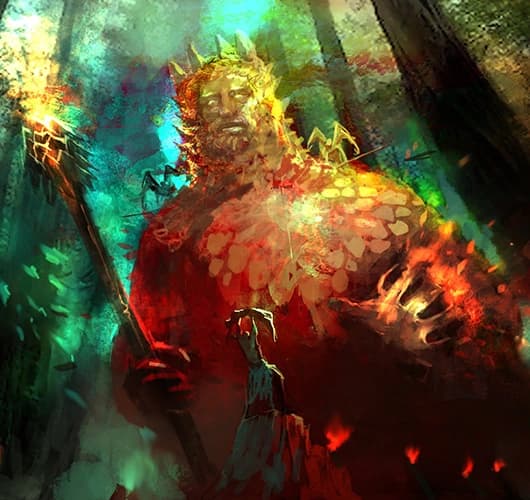
Dionysus: the Olympian god of wine
Dionysus was the Olympian god of wine, fertility, festivity, and revelry. Known for his lack of fidelity, he stole the love of Ariadne from the hero Theseus and set in motion the chain of grief that bound Theseus to the service of the Sisters of Fate.

Helios: the sun god Kratos beheaded
Kratos once saved Helios from the Titan Atlas. Years later he tore the sun god's head from his body and carried it through Olympus as a lantern.
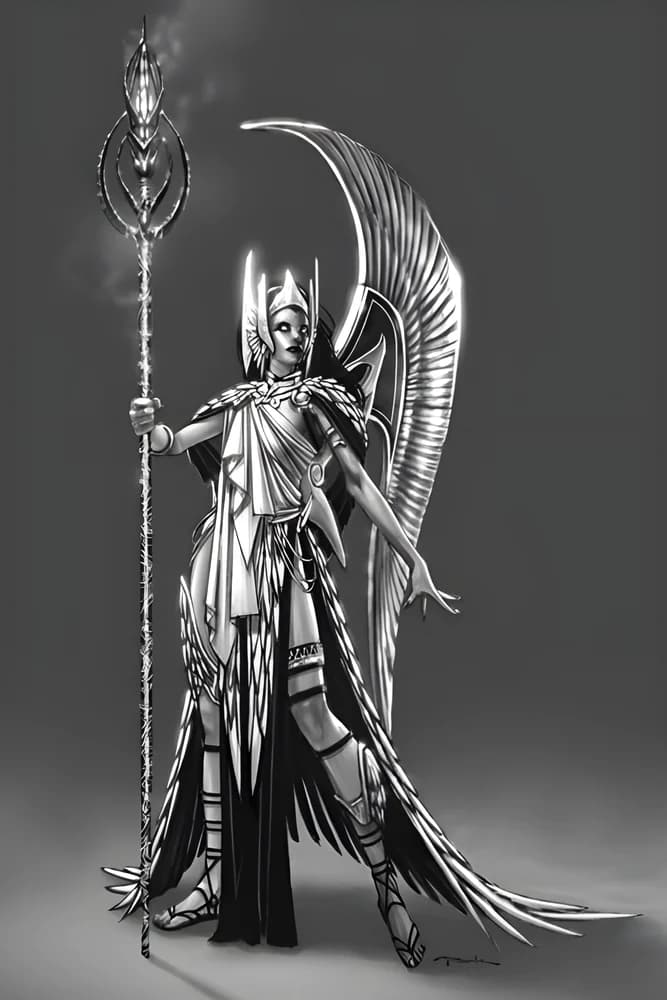
The Sisters of Fate
The Sisters of Fate were three Primordial sisters who held absolute power over time and the destiny of every mortal, god, and Titan. Loyal to Zeus, they stood between Kratos and the Loom of Fate, until he slew them and seized the power to change his own past.

Zeus
Zeus was the King of Olympus and ruler of the Greek Pantheon, the youngest son of Cronos who freed his siblings, ended the Great War, and claimed the heavens. Father of Kratos, he became the great antagonist of the Greek age and fell at last to the very son he had tried to destroy.
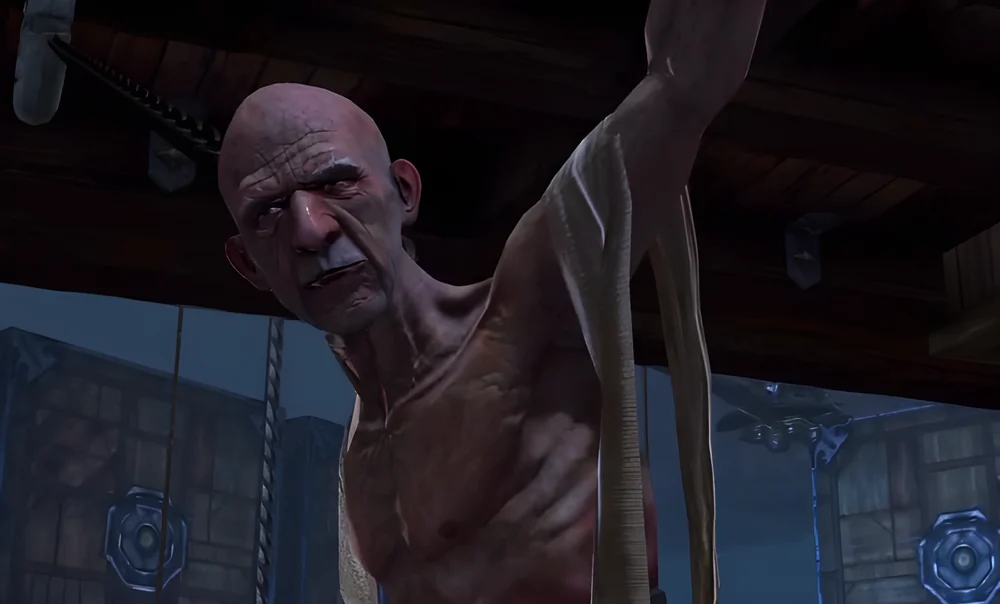
Daedalus
Daedalus was the master craftsman of Athens who built the great Labyrinth for Zeus in return for the promise of his lost son Icarus. Driven to madness in years of servitude and chained within his own creation, he was crushed when Kratos set the Labyrinth turning, and died grateful at last to be free.
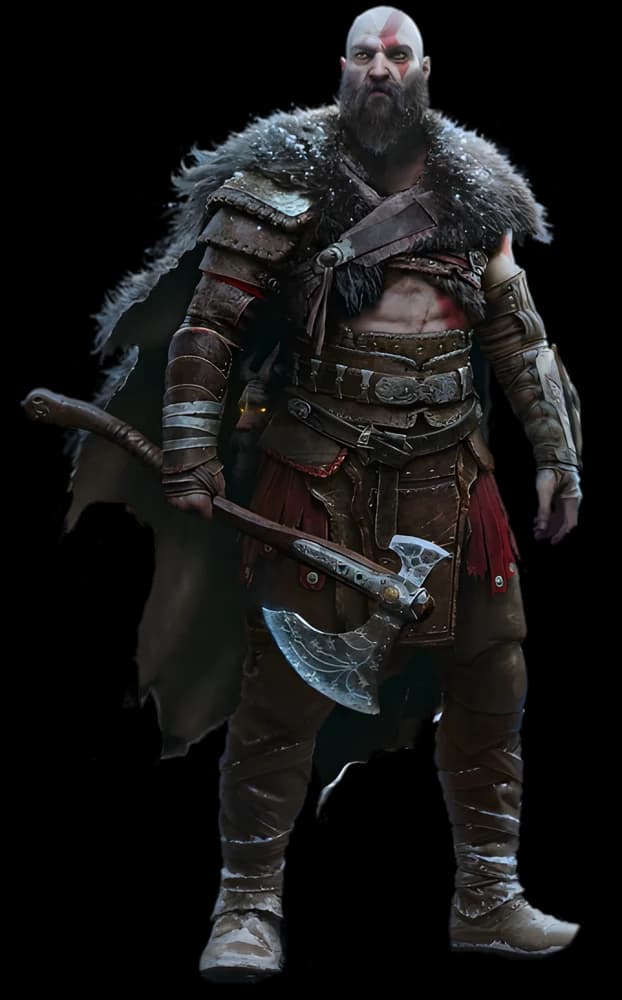
Kratos
Kratos was the demigod son of Zeus who rose from a Spartan general to the Greek God of War, destroyed the pantheon of Olympus in a quest for vengeance, and then began again in the Norse realms as a father seeking to leave his bloody past behind.
Mentioned in4 entries
Daedalus
Daedalus was the master craftsman of Athens who built the great Labyrinth for Zeus in return for the promise of his lost son Icarus. Driven to madness in years of servitude and chained within his own creation, he was crushed when Kratos set the Labyrinth turning, and died grateful at last to be free.
Dionysus: the Olympian god of wine
Dionysus was the Olympian god of wine, fertility, festivity, and revelry. Known for his lack of fidelity, he stole the love of Ariadne from the hero Theseus and set in motion the chain of grief that bound Theseus to the service of the Sisters of Fate.
Minotaur
The Minotaurs were a species of towering bull-headed warriors first bred by Ares as brutes for his armies. From the labyrinth-bound Asterion of legend to the armored guardian of Pandora's Temple, they served as beasts of war across Greece and were a recurring foe of Kratos.
Theseus
Theseus was a Greek demigod, son of Poseidon and former hero-king of Athens, celebrated for slaying the Minotaur. Worn down by old griefs, he gave himself to the service of the Sisters of Fate as Keeper of the Horse Key, guarding the Steeds of Time until Kratos cut him down to claim the way forward.
Get new articles in your inbox
No spam. New lore drops, canon conflicts, and deep dives only when they’re worth reading.
Some links on Lore Fortress are affiliate links. If you buy through them we earn a small commission at no extra cost to you.