Nidavellir: the dwarven capital of Svartalfheim
Nidavellir was the capital city of the Dwarves in Svartalfheim, a mining settlement set between the wetlands and the Bay of Bounty. Its name meant Dark Fields in the dwarven tongue, and its streets lived under the shadow of a great statue of Odin.
Nidavellir was the capital city of the Dwarves and one of the larger settlements of Svartalfheim, raised on the waterways where the wetlands met the broad Bay of Bounty. A place of docks, markets, taverns, and mines, it was watched over by a towering statue of Odin and served by rigs that labored for Asgard. During Fimbulwinter it became the first destination of Kratos and Atreus in their search for the lost war god Tyr, and it was the home of the city official and former rebel leader Durlin. (God of War Ragnarök)
The dark fields#
The name Nidavellir was older than the city and belonged first to the land itself. In the dwarven tongue it meant "Dark Fields," and it was what the Dwarves called their homeland. The name Svartalfheim, "Land of the Dark Elves," was an invention of the Aesir. According to Mimir, the Aesir could not tell the difference between the Dwarves and the Dark Elves of Alfheim, and so they named the dwarven homeland after the wrong people entirely. The Dwarves never accepted the error as their own, and their chief city carried the true name forward. In the Poetic Edda, Nidavellir is where a hall of gold stood for the kin of a dwarf named Sindri. (God of War Ragnarök; Poetic Edda)
The city of iron#
Nidavellir stood at the heart of Svartalfheim's waterways, with rivers at both ends of the city connecting the surrounding wetlands to the larger Bay of Bounty. Boats came in at its docks, and its streets climbed past workshops, awnings, and market squares toward the sewers and passages that threaded the town together. It was among the larger cities of the dwarven people, and Durlin himself, in a runic notice warning travelers of the dangers on the roads, called it the city of iron. (God of War Ragnarök)
The land around it earned the warning. The wetlands beyond the city walls were the hunting ground of the Grim, creatures dangerous enough that Sindri cautioned travelers against them, and Wretches nested among the rocks of the waterline and later plagued the city's own sewer. Within its bounds, however, Nidavellir remained a relatively safe haven. Its marketplace was dominated by a giant statue of Odin, and a tavern near the center of town served as a gathering place where the dwarven musician Raeb performed. The office of the city's Safety Official, held in Durlin's day, sat beyond it, where Durlin kept his pet, a small creature called Dinner that Kratos took for a baby Kraken. (God of War Ragnarök)
Even the weather set Nidavellir apart. While Fimbulwinter buried Midgard in snow, Svartalfheim stayed warm; Mimir observed that the great winter touched each Realm differently, and in the dwarven lands it brought instead a rise in natural gas and more frequent earthquakes. Fimbulwinter never froze the dark fields, but it shook them. (God of War Ragnarök)
Under the shadow of the All-Father#
For all its industry, Nidavellir was not a free city. The statue of Odin that loomed over its marketplace told the truth of its condition: when Atreus supposed the dwarves must simply admire the All-Father, Kratos judged that the monument had been built out of fear. The mining rigs north of the city in the Bay of Bounty labored in service of Asgard, and their smoke fouled the air over the water, a grievance Raeb raised with any traveler who would listen. (God of War Ragnarök)
The city had once tried to throw that shadow off. Durlin, in alliance with Laufey the Just, the woman later known as Faye, led the dwarves of Nidavellir in a coup against the Aesir. During the rebellion Durlin forged a ceremonial hammer that became the symbol of the Dwarven Resistance. The uprising failed. Heimdall burned the side of Durlin's head as punishment, Laufey fought Thor and got away, and the Aesir confiscated the hammer and buried it beneath the statue of Alviss Stonefoot out in the bay, where it long lay hidden. Durlin remained in the city as a minor official, drinking away the memory of his defeat. (God of War Ragnarök)
The coming of Kratos and Atreus#
When Kratos, Atreus, and Mimir crossed into Svartalfheim during Fimbulwinter, Sindri directed them to find Durlin in Nidavellir, warning them of the Grim that haunted the country outside the city. The travelers fought off Wretches in the wetlands, took a boat down the river, and arrived to a cold welcome: an alarm sounded, and the dwarves retreated into their homes, telling Atreus to go away when he tried to speak with them. In the plaza beneath the statue of Odin they found Sindri, who fitted Atreus' bow with a drawstring imbued with Sonic magic to break the Soundstone that blocked the city's pathways, and gave them a compass that pointed toward their chosen goal. (God of War Ragnarök)
At the tavern, Raeb greeted the father and son, pointed them toward Durlin's office, and asked that they see about shutting down the rigs polluting the air. On the way, Mimir guided them out into the Bay of Bounty to silence the mining rigs he had once helped raise for Odin, and to free a Lyngbakr that had been chained there in the days of his old service. The rigs went quiet and the smoke cleared, but the creature, grown accustomed to its bonds, would not leave its place even when freed, to Mimir's grief. Kratos hoped the breeze would bring it some comfort, and when Mimir protested that it was not enough, answered only, "It seldom is." (God of War Ragnarök)
In his office, Durlin received the strangers coldly until he learned that his old ally Laufey had married Kratos under the name Faye, and that she was dead. Hiding his grief, and under the guise of writing them a fine for breaking his safety rules, he passed Atreus directions to the Jarnsmida Pitmines, where Tyr was held, while Dinner drew a seed of Alfheim from its tank for the boy. From Nidavellir the travelers rode a mining trolley up the mountain toward the pits, surviving an attack by Grim on the way, and found the war god alive in his cell. (God of War Ragnarök)
Secret ways and the hammer of the revolution#
Nidavellir did not stay quiet after that first visit. The Aesir came to stalk its streets, watching for Kratos' return. When Kratos and Brok later slipped back into Svartalfheim in search of the Lady of the Forge to make the Draupnir Spear, they entered the city unseen through the Myrkr Tunnels, an abandoned service tunnel that Brok kept as one of his secret ways in. At the foot of the rail line rising toward The Forge stood a berserker gravestone belonging to Hardrefill the Callous, a follower of the false King Hrolf remembered for his particular cruelty in battle, whose spirit Kratos later defeated. (God of War Ragnarök)
The city's oldest wound was the last to close. After Odin used Durlin as a living shield against Kratos, the old rebel asked one favor: that Kratos recover the hammer of the revolution from beneath the statue of Alviss Stonefoot in the bay. It was a ceremonial thing, of no use for crafting or fighting, which Durlin called a symbol of the dwarves' resistance to Asgard's rule. Durlin believed the sight of it might do the dwarves some good and show that they had not entirely given up. Kratos drew it from its hiding place and carried it back to the tavern of Nidavellir, and the emblem of the dark fields' defiance came home to the city of iron. (God of War Ragnarök)
Sources
- GameGod of War Ragnarök, Santa Monica Studio, 2022
- BookPoetic Edda, Anonymous, compiled around 1270
Spotted a factual error or a primary source we missed? Email a correction. Every flagged claim gets reviewed.
Followed from this entry
Alfheim: the elves' war over the Light
Light and Dark Elves fought for centuries over the Light of Alfheim, the source that powers the Bifrost. It changed hands more than two hundred times.
Midgard: Kratos' home, shaped from Ymir
Odin shaped Midgard from the body of the giant Ymir. Kratos settled there after leaving Greece, and Fimbulwinter later froze the Lake of Nine.
Svartalfheim: where Brok and Sindri forged
The richest of the Nine Realms in minerals, and home to the dwarven smiths. Odin sealed the path to it for generations and bent its trade to Asgard.
Kraken: the sea beast of the Island of Creation
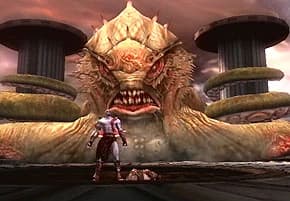
The Kraken was a giant meat-eating sea monster, an octopus-like horror of armored tentacles and a fanged maw. One rose against Kratos on the Island of Creation after the death of the Last Spartan and nearly crushed him before he impaled her through the mouth, while in the Norse realms a hatchling of the same breed lived as the pet of the dwarf Durlin.
The Aesir
The Aesir were one of the two tribes of Norse gods, natives of Asgard known for their war-like nature and their hunger for knowledge. Descended from the slain primordial Ymir and ruled by Odin, they claimed dominion over all creation, waging genocide upon the Jotnar and war upon the Vanir before their fall in Ragnarok.
Atreus (Loki): Kratos's Son and the Truth of His Name
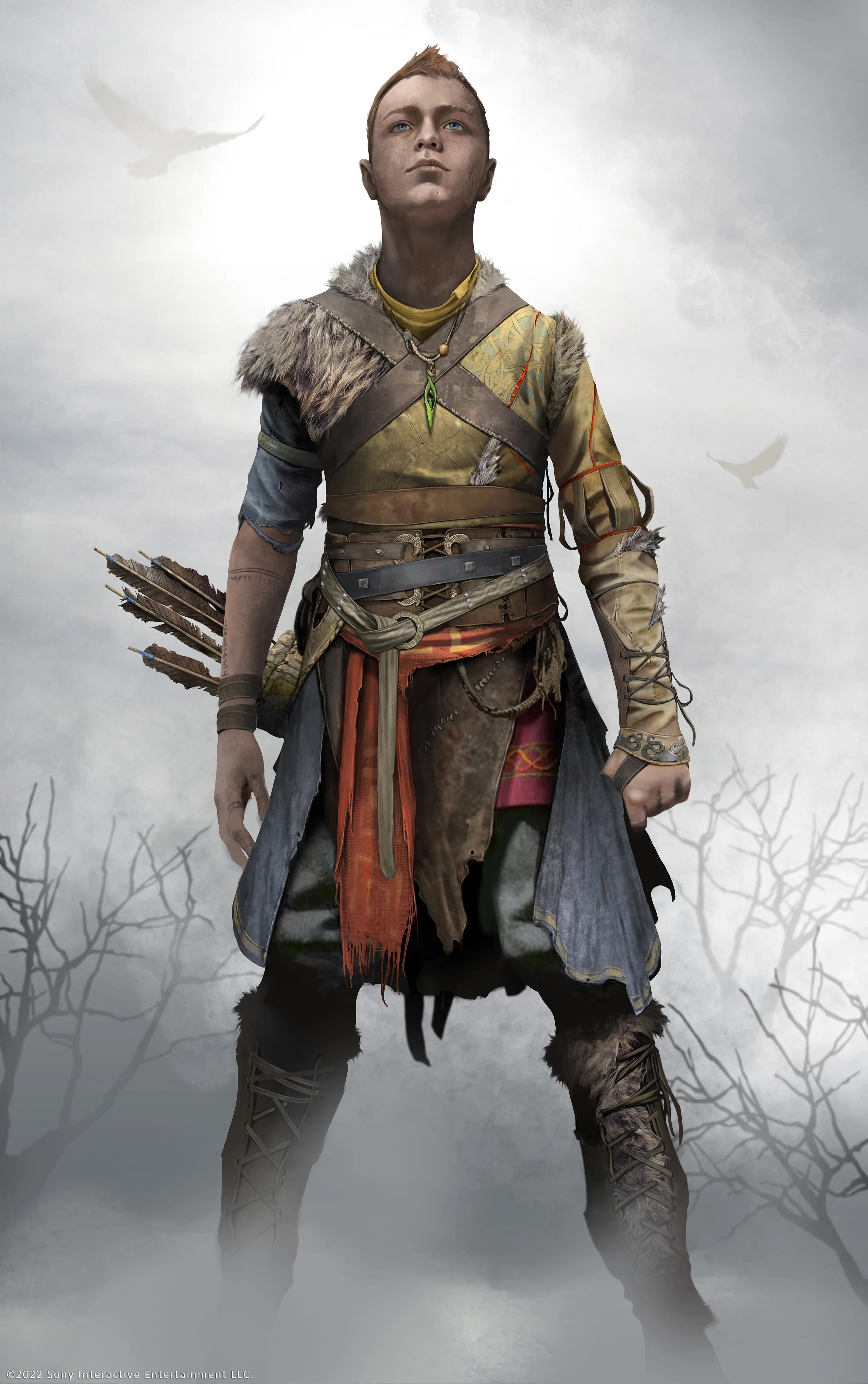
Atreus was the son of Kratos and the Jotunn Faye, born in Midgard and given the hidden name Loki. Across two great journeys he grew from a sickly boy into the prophesied champion of the Giants, the god of mischief whose fate was bound to Ragnarok.
Mentioned in2 entries
Alberich Hollow: tunnel road of the Bay of Bounty
Alberich Hollow was a tunnel region in the north of Svartalfheim's Bay of Bounty, entered from the great wooden walkway above Dragon Beach. Its abandoned dwarven works held half of the seed that opened the road to Muspelheim, a rift into Yggdrasil, and the lair of the dreadful Grim Ormstunga.
Dragon Beach: bone strewn shore of the Bay of Bounty
Dragon Beach was a geyser pocked shore on the eastern edge of the Bay of Bounty in Svartalfheim, scattered with colossal remains and the ruins of an abandoned Dwarven settlement. A dragon that seemed carved from stone waited at its southern end, and the ghost of a treasure seeking sailor lingered on the ledges above its sands.
Get new articles in your inbox
No spam. New lore drops, canon conflicts, and deep dives only when they’re worth reading.
Some links on Lore Fortress are affiliate links. If you buy through them we earn a small commission at no extra cost to you.