Skjöldr: the farm boy of New Midgard
Skjöldr was a young Midgardian farm boy resettled on the outskirts of Asgard after the Desolation destroyed his homeland. He befriended Atreus at the foot of the great wall, survived being thrown into the battle of Ragnarök as one of Odin's mortal shields, and afterward led the displaced Midgardians as they rebuilt their lives in Midgard.
Skjöldr was a Midgardian mortal, a farm boy of no great birth, who was carried with his family to Asgard when Odin gathered the surviving peasantry of Midgard after the Desolation. Settled with the other refugees in a camp called New Midgard at the foot of the great wall, he became the first friend Atreus made in Asgard, knowing him only as Loki. Through the last days of Fimbulwinter and the war that followed, Skjöldr passed from gullible farmhand to wounded survivor to a leader of his scattered people, and when the fighting was done he spoke of sailing out beyond the Nine Realms entirely. (God of War Ragnarök)
A refugee of the Desolation#
Skjöldr came from Midgardian farming stock, and his youth was overturned when the Desolation forced his family and the rest of the mortal peasantry from their homes. Odin brought the survivors into Asgard, an act the refugees received as generous hospitality from the Allfather. In truth, Odin had caused the Desolation himself, and the mortals he sheltered owed their ruin to the same god they now thanked for their rescue. (God of War Ragnarök)
The Midgardians were not permitted inside the city. Only the Aesir gods could pass the towering fortification raised by Hrimthur, and the refugees were settled instead in a small camp on the outskirts, not far from the Niflheim Tower and the half submerged Temple of Týr. The settlement took the name New Midgard, and there Skjöldr lived and worked with his family beneath the shadow of a wall he could never cross. By his own understanding, the only way into the city itself was with magic. (God of War Ragnarök)
He was a thin boy of average height, about the same age as Atreus, Thrúd, and Angrboda, with pale, somewhat dirty skin, freckles, blonde hair, and brown eyes. His light blue embroidered tunic was slightly torn and tattered, worn over a yellow shirt and belted with brown leather at the waist, and around his neck hung a silver symbol on a cord. Everything about him spoke of a farm boy scraping by at the edge of a god's charity. (God of War Ragnarök)
The stranger at the wall#
When Atreus allowed Huginn to carry him to Asgard, he fought his way past hostile creatures until he reached the little settlement at the foot of the wall. There he met Skjöldr, and the two boys took to each other at once. Atreus gave his name as Loki, and Skjöldr freely explained how the Midgardians had come there, that Odin had brought them to save them from the Desolation, and that they were not allowed inside the wall with the Aesir. (God of War Ragnarök)
Skjöldr was startled when the newcomer announced that he had to get over the wall regardless, claiming to be a guest of Odin. When Atreus went further and pretended to be the Allfather's apprentice, the gullible farm boy was sincerely impressed, much to the young god's private amusement. For Atreus, who had spent years with little company beyond his father, the easy friendliness of the conversation was a genuine pleasure. Learning that no path led up from outside, Atreus resolved to climb the wall himself, a decision that baffled his new friend. Skjöldr walked with him to its base, wished him good luck, and watched from below as the boy scaled the stone toward a city no Midgardian would ever see. (God of War Ragnarök)
Milk curd and Thrúd#
Skjöldr's friendship with the boy he knew as Loki continued through Atreus's stays in Asgard. On one occasion the two waited together for Thrúd to arrive, and Atreus showed him a focusing exercise his father had taught him, a discipline for mastering the emotions that Heimdall kept trying to provoke in him. (God of War Ragnarök)
When Thrúd appeared, Skjöldr grew flustered and made awkward attempts at conversation with her, clumsy enough that Thrúd remarked on how very weird Midgard boys were. Atreus, thinking of another girl entirely, answered that weird could be good. Skjöldr's affection for the daughter of Thor was plain to those around him. He gave her a jar of milk curd to carry home to her mother Sif, a gift he made often, and when Mimir later wondered aloud whether Thrúd was the girl Atreus fancied, Atreus corrected him. It was Skjöldr who liked Thrúd. (God of War Ragnarök)
Odin's mortal shield at Ragnarök#
When Ragnarök broke over Asgard and the united army of Kratos assaulted it, Odin's hospitality showed its true price. The Allfather commanded the Midgardians to hold their ground against the invaders, telling them that they owed him for the shelter he had given. Farmers and refugees were set in the path of a war between gods. (God of War Ragnarök)
Skjöldr was found on the field bloody and wounded, rescued by Lady Sif. When he told Atreus of Odin's command and the debt the Midgardians were said to owe, Atreus answered that he did not owe Odin his death. Skjöldr left the battle with Sif, who was gathering every Midgardian the two of them could find and leading the survivors out of doomed Asgard. (God of War Ragnarök)
Leader of the displaced#
Skjöldr survived the fall of Asgard, and in the aftermath he stopped waiting for gods to provide for his people. Atreus found him in a hold in Midgard, directing the displaced Midgardians as they raised a new camp. By Angrboda's order, her wolves had helped the survivors with hunting, and with Fimbulwinter ending there was plenty to feed everyone. Atreus told his friend to take care, and Skjöldr reassured him before the young god departed. (God of War Ragnarök)
Some time later, Kratos, Freya, and Mimir came upon Skjöldr at a derelict outpost, where the boy was straining to pry loose an Asgardian coin embedded in a great rock. It was the same coin Odin had once given Kratos, hurled away in contempt with such force that it had buried itself in the stone. Skjöldr told the trio of his dream, to sail out into adventure beyond the Nine Realms themselves, and Kratos wished him the best of luck. Mimir voiced the hope that the boy would one day grow into a great king, if only so the three of them could say they had known him when he was an idiot. In his care for the displaced and his hunger for the open sea, the farm boy of New Midgard had already begun to look like something more. (God of War Ragnarök)
Sources
- GameGod of War Ragnarök, Santa Monica Studio, 2022
Spotted a factual error or a primary source we missed? Email a correction. Every flagged claim gets reviewed.
Followed from this entry
Angrboda: the last giantess of Ironwood
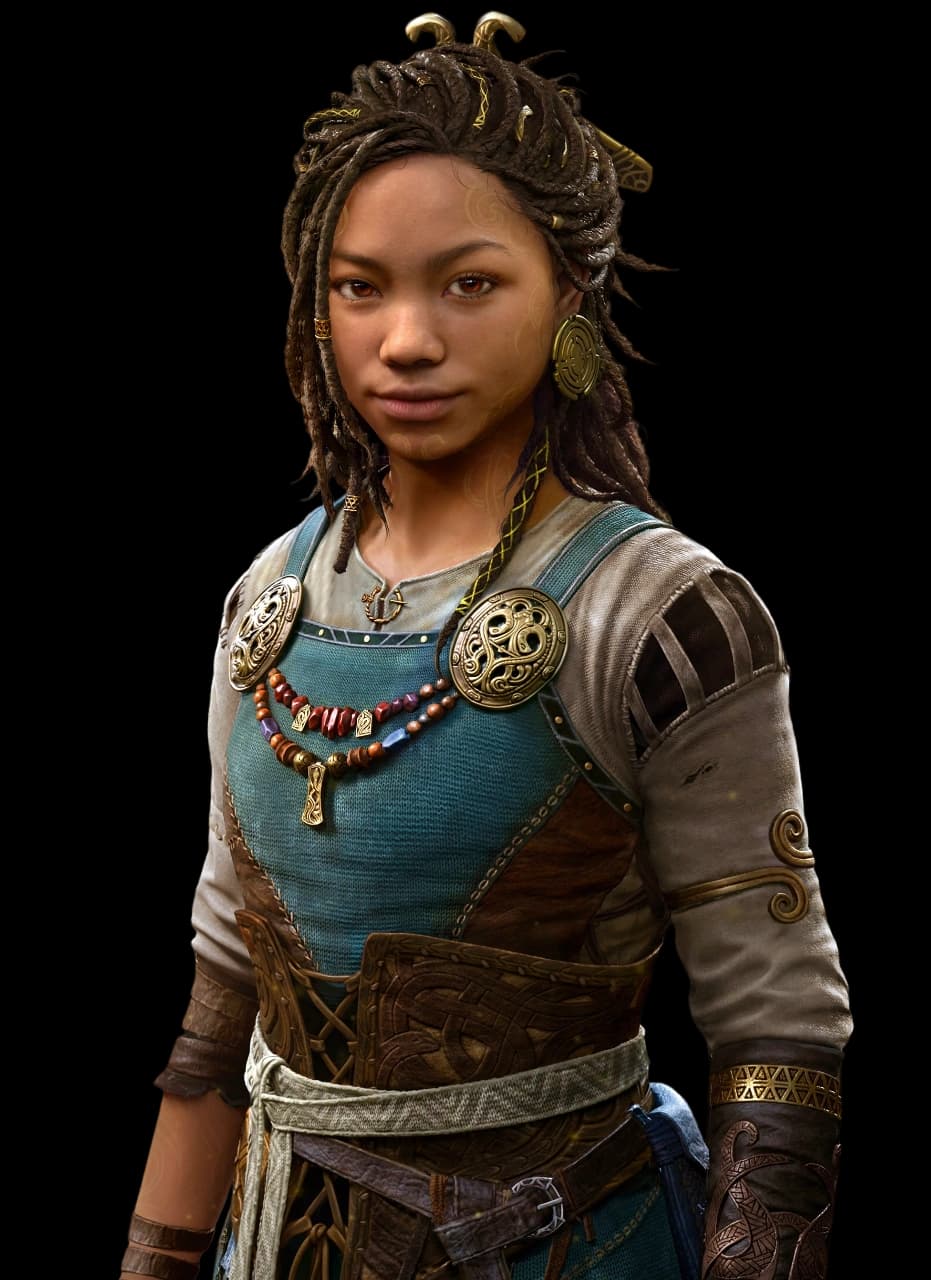
Angrboda grew up almost alone in Ironwood, painting the prophecy of Ragnarok. She gave Atreus the soul marbles of the lost Giants and made him their keeper.
Atreus (Loki): Kratos's Son and the Truth of His Name
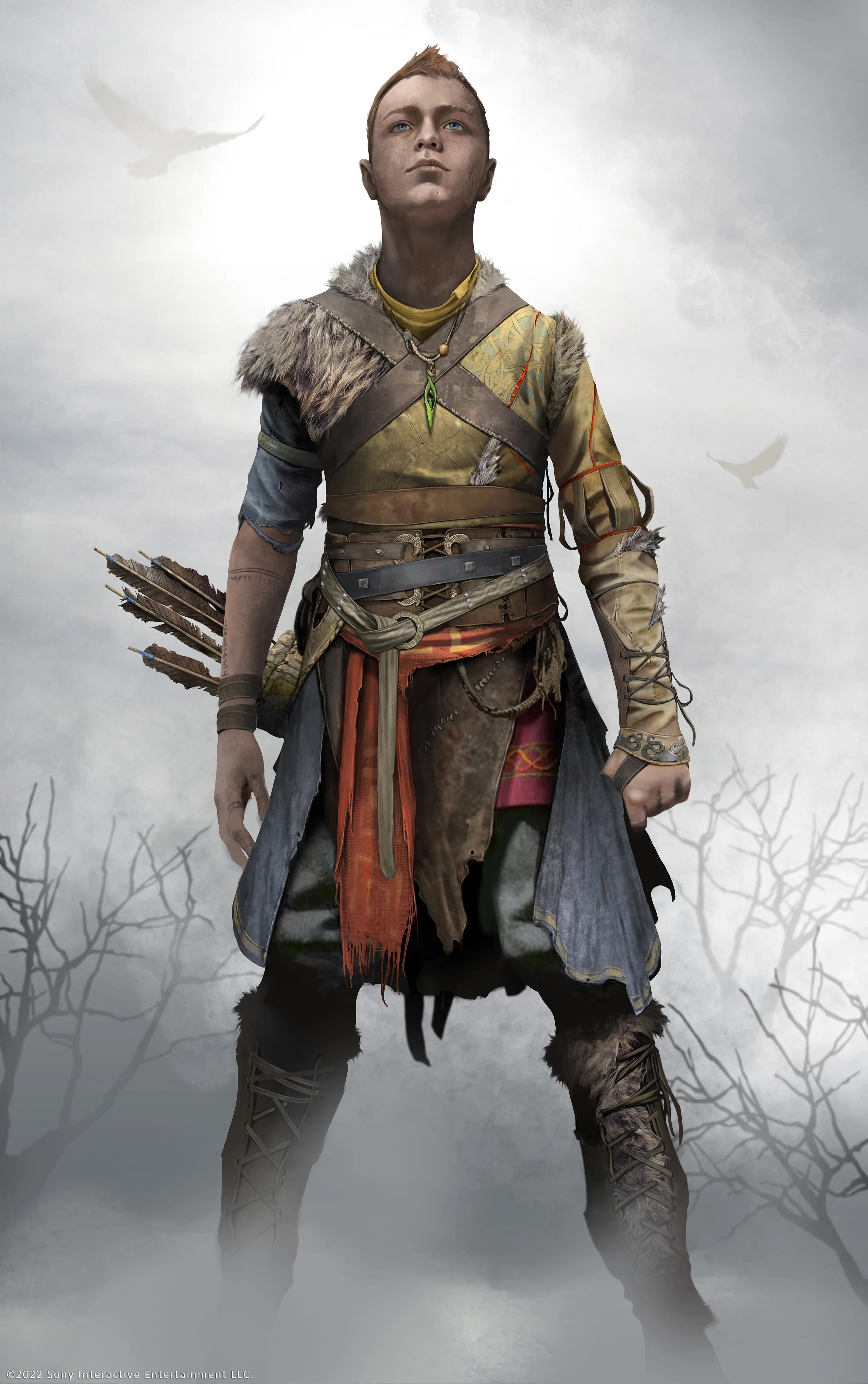
Atreus was the son of Kratos and the Jotunn Faye, born in Midgard and given the hidden name Loki. Across two great journeys he grew from a sickly boy into the prophesied champion of the Giants, the god of mischief whose fate was bound to Ragnarok.
Hrimthur: the stonemason who doomed Asgard
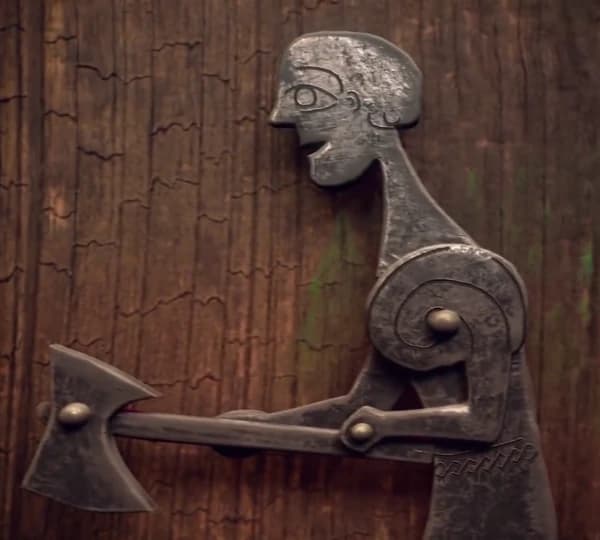
Hrimthur was a Jotunn stonemason, the son of Thamur, who completed the Great Walls of Jotunheim and then sought vengeance on the Aesir. Disguised as a mortal, he rebuilt the walls of Asgard and hid a weakness within them that would one day open the realm to its destruction.
Kratos
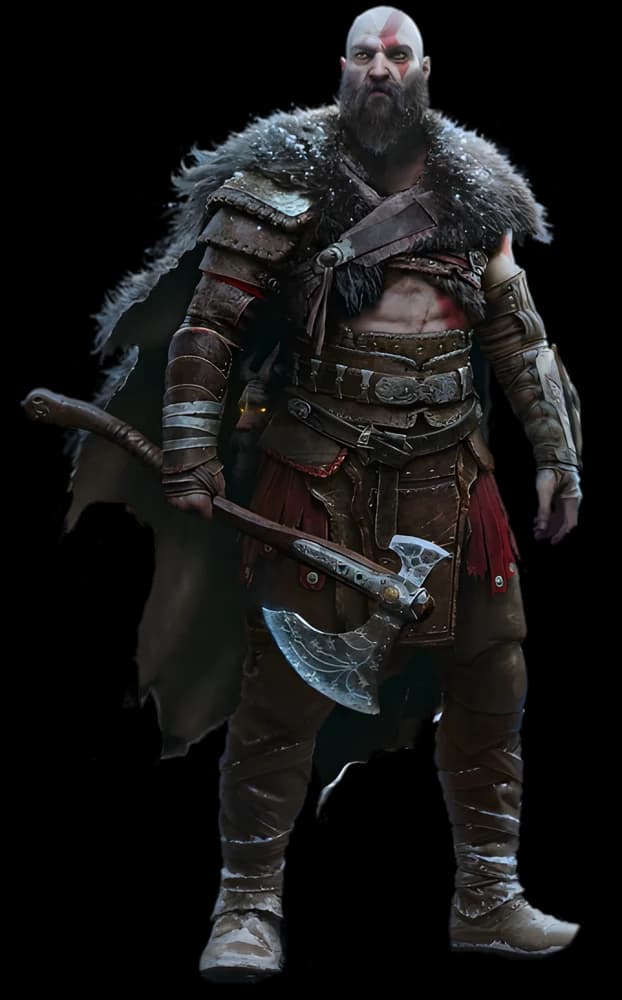
Kratos was the demigod son of Zeus who rose from a Spartan general to the Greek God of War, destroyed the pantheon of Olympus in a quest for vengeance, and then began again in the Norse realms as a father seeking to leave his bloody past behind.
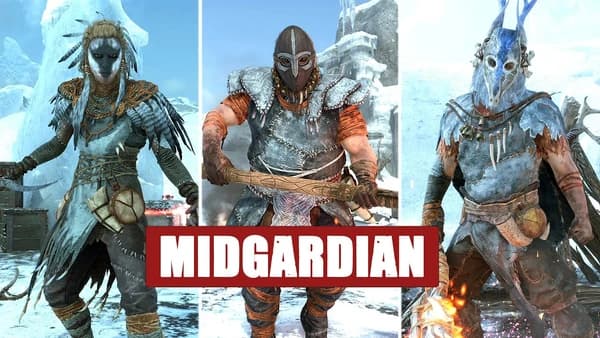
Midgardians
The Midgardians, also called Norsemen, were the mortal inhabitants of Midgard, divided into warring Nordic clans by their worship of the Aesir or the Vanir. Short-lived yet fearless, they sought glorious deaths in battle to claim a place among the honored dead.
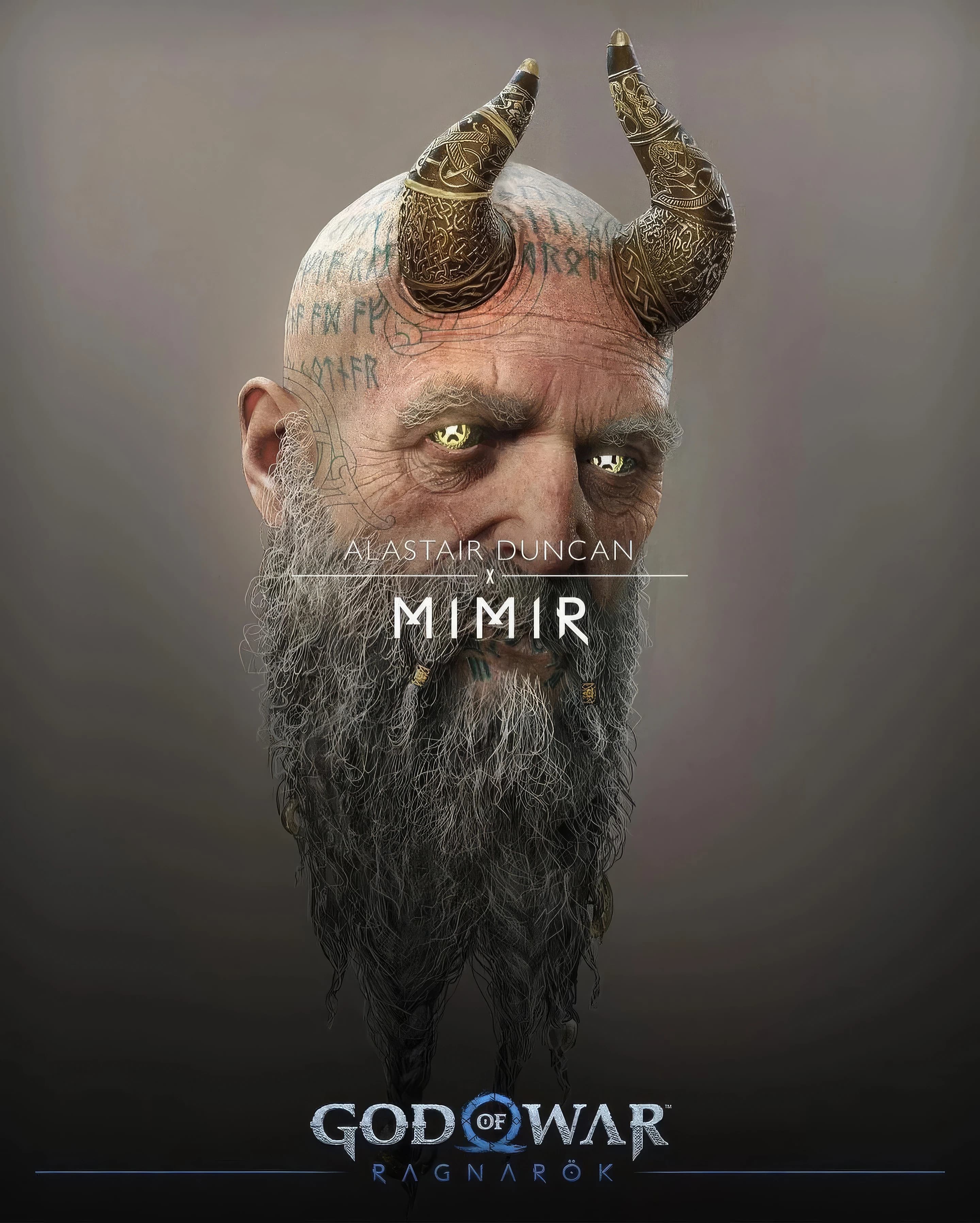
Mimir
Mimir was a Celtic fae who rose to become Odin's advisor and the ambassador of the Aesir before the All-Father imprisoned him for over a century. Freed and reanimated as a disembodied head by Kratos and Atreus, he became their guide, conscience, and friend across the Nine Realms.
Get new articles in your inbox
No spam. New lore drops, canon conflicts, and deep dives only when they’re worth reading.
Some links on Lore Fortress are affiliate links. If you buy through them we earn a small commission at no extra cost to you.