Why Didn't Darth Vader Upgrade His Suit?
Vader's armour was slow, heavy and painful, and in Legends he was offered the chance to replace it with something far better. He turned it down because the procedure could have killed him, and because the pain kept him tied to the dark side.
Vader kept the suit because there was no good way out of it. In Legends he longed to be less dependent on it and tried at times to manage without it, but never succeeded, and the flawed linkages kept him tied to Imperial medics for the rest of his life. The armour also kept him in constant pain, and that pain was what kept his rage, and his power in the dark side, burning. (Star Wars: Darth Vader: A 3-D Reconstruction Log; Star Wars: Shadows of the Empire)
The suit was never built for combat#
What Darth Vader wore was a life support system with armour bolted to it. It carried prosthetic arms and legs, a full breathing apparatus, and enough hardware to bring his mass in armour to 120 kilograms. Everything about it was heavy and deliberate. The man inside had once been one of the fastest duelists in the Jedi Order, and the suit took that away from him, forcing him to change his lightsaber style to cope with its weight and stiffness. (Revenge of the Sith; Star Wars Blueprints: The Ultimate Collection; Dark Lord: The Rise of Darth Vader)
Legends sources are blunt about how exposed it left him. Palpatine knew the armour was vulnerable to electrical discharge and used the threat of Force lightning to keep his apprentice in line. The Jedi survivor Roan Shryne worked out during a duel that the chest-mounted control panel was a weak point, and that Vader's whole fighting style prioritised protecting his centre over protecting his limbs. That is not a warrior choosing an aggressive guard. That is a man defending the machine keeping him alive. (Dark Lord: The Rise of Darth Vader)
Nights were no better than days. The armour did not repair the damage done on Mustafar, it just held the line. In Legends, Vader experimented with dark side healing during his meditations and could make his ruined lungs work unaided, but only for minutes at best. The relief itself was the problem: the moment of happiness broke the concentration on darkness that the healing depended on. He believed that with enough willpower he would one day manage it permanently, and he never did. (Star Wars: Shadows of the Empire)
The way out he never found#
The obvious fix was a better body. Nothing in Legends shows Vader getting one. The suit was damaged and repaired, and upgraded in places, several times over the years, and Vader added some insulation once he learned it was vulnerable to electrical discharge, but its core design stayed, flaws and all. (Star Wars: Darth Vader: A 3-D Reconstruction Log)
Any rebuild would also have meant more surgery, and Vader had already been through one reconstruction that left him hollowed out, carried out without anaesthetic. Putting what was left of his body back on a surgical table meant handing his fate to someone else, which is the last thing a Sith Lord in Palpatine's court would ever do willingly. (Star Wars: Darth Vader: A 3-D Reconstruction Log)
Pain was the point#
The second reason is the one people miss. The suit hurt, and Vader needed it to hurt. (Star Wars: Darth Vader: A 3-D Reconstruction Log)
The dark side runs on emotion. Anger, hatred, fear and pain are the fuel, and Vader had a permanent supply strapped to his chest. Every breath was a reminder of the duel that ruined him and of everything he had done since. Take the agony away and you take away the engine. In Legends that was a deliberate choice from the start: no anaesthetic was used during his reconstruction, on the Emperor's orders, to deepen his connection to the dark side. (Star Wars: Darth Vader: A 3-D Reconstruction Log)
There is a quieter cost too. Less physical pain would have meant a clearer mind, and a clear mind had nowhere to hide from memory. The man who could think straight was the man who would start thinking about Padme Amidala, about Obi-Wan Kenobi, about the Jedi he used to be. Upgrading the suit would have made Vader a stronger duelist and a weaker Sith, because it risked bringing Anakin Skywalker back to the surface. Vader was not interested in meeting him again. That last part is our reading, but it fits how fragile his dark side healing proved. (Star Wars: Shadows of the Empire)
Palpatine wanted him limited#
There is also the matter of who signed off on the armour in the first place. Palpatine had the suit built, and the medical droid who oversaw the work suspected its faulty linkages were left that way on purpose, to keep an apprentice dependent rather than create a rival. (Revenge of the Sith; Star Wars: Darth Vader: A 3-D Reconstruction Log)
The contrast with General Grievous makes the point. In Legends, Grievous was rebuilt on Geonosis into a duranium alloy body with arms that split at the shoulder into four, enhanced equilibrium to make him faster on his feet, and organs sealed in a synthskin sack that could survive vacuum. That was a machine designed to hunt Jedi and win. Vader's suit was designed to keep a man breathing, and Legends even has the same droids that rebuilt Grievous do the work. (Star Wars: Revenge of the Sith: The Visual Dictionary; The New Essential Guide to Droids)
It's tempting to say Palpatine learned from the Grievous experiment. Dooku had built a superior cyborg and ended up with a commander who resented his handlers, and nothing suggests the Emperor wanted that from his own apprentice. Under the Rule of Two, the apprentice is always waiting for the master to slip. Vader himself told Sidious he would not kill him until he had learned everything he knew, and Sidious kept the threat of Force lightning, and the suit's weakness to it, in reserve. (Dark Lord: The Rise of Darth Vader; Unknown Soldier: The Story of General Grievous)
What it cost him#
The result is one of the strangest trade-offs in the saga. Vader spent more than two decades as the most feared being in the Galactic Empire while operating at a fraction of what he could have been. He knew it. Palpatine knew it. Both of them left it alone. (Star Wars: Darth Vader: A 3-D Reconstruction Log; Return of the Jedi)
The suit stayed because it was doing three jobs at once. It kept him alive, it kept him angry, and it kept him underneath Palpatine. Upgrading it would have fixed the first job and broken the other two, and neither Sith Lord showed any interest in that. (Star Wars: Darth Vader: A 3-D Reconstruction Log; Dark Lord: The Rise of Darth Vader)
It only came off once, on the deck of the second Death Star, when Luke Skywalker removed the helmet from a dying man who had finally chosen to stop being Darth Vader. By then the suit had done everything it was built to do. (Return of the Jedi)
Frequently asked questions
- Was Darth Vader's suit deliberately made weak?
- Legends never says so outright, but it hints hard. The suit's linkages were faulty and needed constant maintenance, and the surgical droid DD-13 suspected Sidious allowed the flaws on purpose to keep Vader from rebelling. It was also nowhere near as capable as the cyborg body built for General Grievous.
- Did Darth Vader's armour cause him pain?
- Constantly. The suit kept him alive but never let him heal, and the agony fed straight into his anger. That anger was the fuel for his connection to the dark side of the Force.
- What were the weak points of Vader's armour?
- Legends sources note two. The suit was vulnerable to electrical discharge, something Palpatine knew and used as a threat, and the chest-mounted control panel was an exposed target that shaped how Vader guarded himself in a duel.
Sources
- VideoRevenge of the Sith, Lucasfilm, 2005
- VideoReturn of the Jedi, Lucasfilm, 1983
- BookDark Lord: The Rise of Darth Vader, James Luceno, 2005
- BookStar Wars: Shadows of the Empire, Steve Perry, 1996
- BookStar Wars: Darth Vader: A 3-D Reconstruction Log, Ryder Windham, 2011
- BookStar Wars Blueprints: The Ultimate Collection, J. W. Rinzler, 2013
- BookStar Wars: Revenge of the Sith: The Visual Dictionary, James Luceno, DK, 2005
- BookThe New Essential Guide to Droids, Daniel Wallace, 2006
- BookUnknown Soldier: The Story of General Grievous, Star Wars Insider 86, 2006
Spotted a factual error or a primary source we missed? Email a correction. Every flagged claim gets reviewed.
Followed from this entry
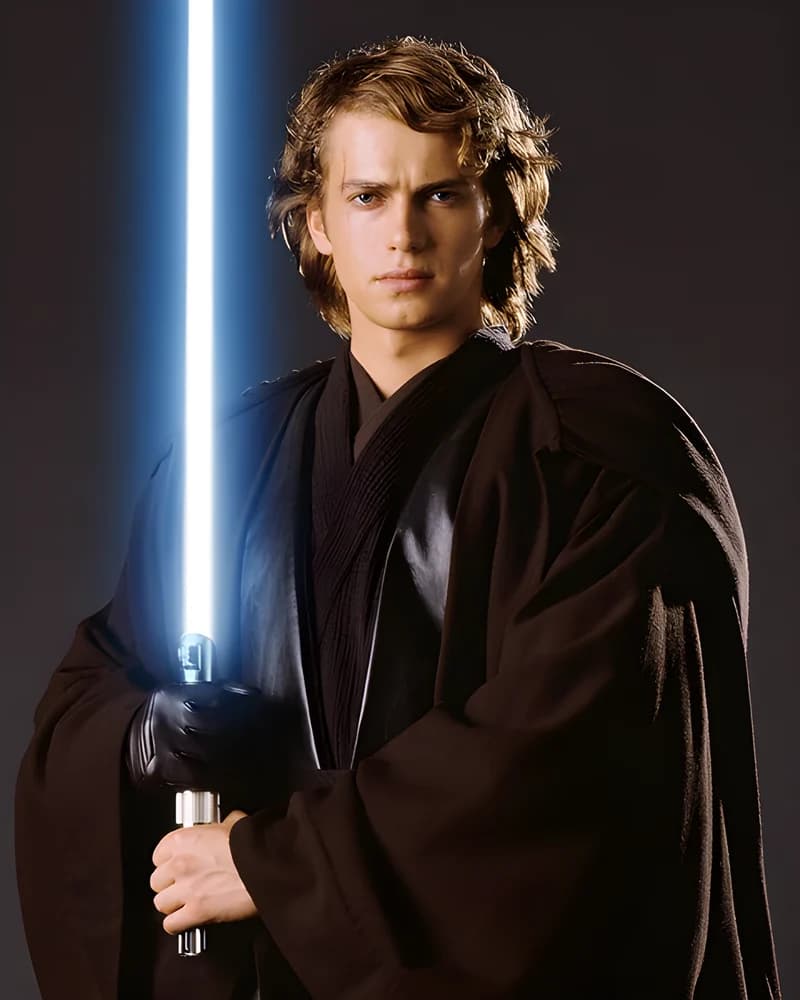
Darth Vader
Anakin Skywalker was the prophesied Chosen One, a Jedi Knight and hero of the Clone Wars who fell to the dark side and became the Sith Lord Darth Vader. He enforced the rule of the Galactic Empire for decades before his redemption and death at the Battle of Endor.

Mustafar
Mustafar was a young volcanic planet of lava seas in the Outer Rim, mined for rare minerals and steeped in the dark side. It was the place of Anakin Skywalker's fall and the site of Fortress Vader.

Palpatine
Sheev Palpatine was the Sith Lord Darth Sidious, who rose through the Galactic Senate to become Supreme Chancellor and then self-proclaimed Emperor. He orchestrated the fall of the Republic and the Jedi Order, ruled the galaxy for decades, and sought to cheat death itself.
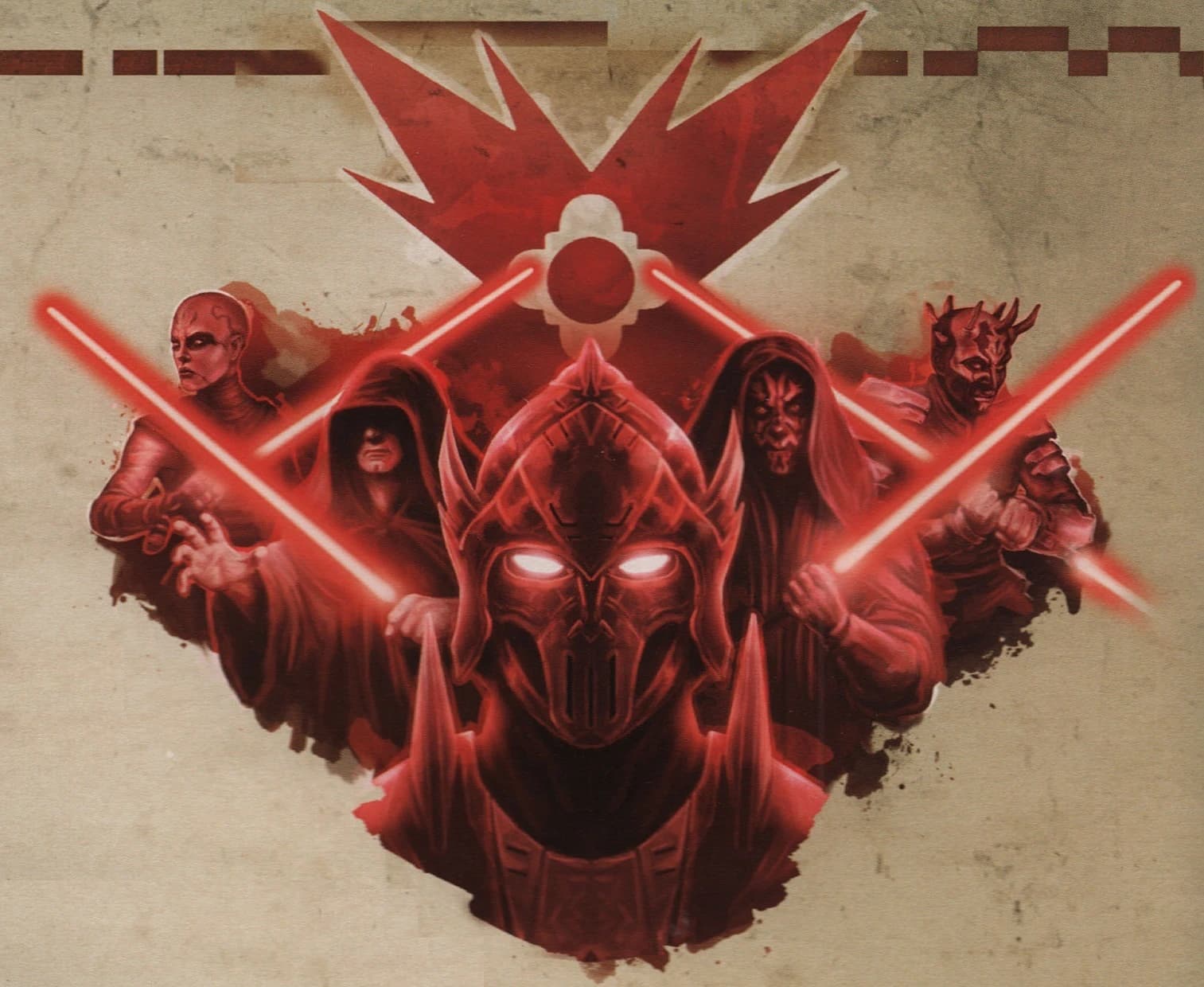
Sith
The Sith were an ancient religious order of Force-wielders devoted to the dark side, driven by hate, anger, and the pursuit of power. Born from a schism in the Jedi Order, they warred with their rivals for millennia, reached the height of their power under Darth Sidious, and were finally destroyed at the hands of Anakin Skywalker and Rey.
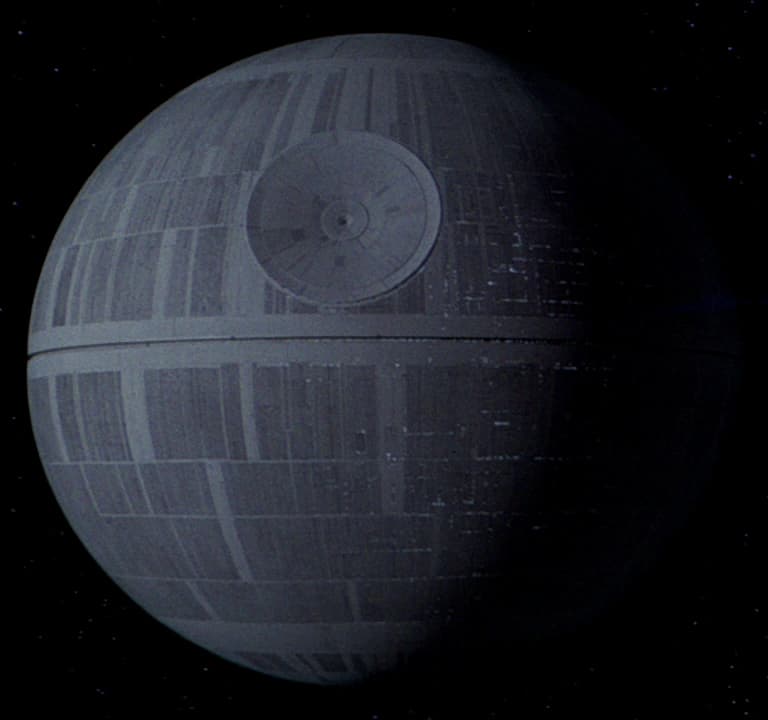
Death Star
The Death Star, formally the DS-1 Orbital Battle Station, was a moon-sized Imperial superweapon capable of destroying an entire planet with a single shot. It annihilated Alderaan before being destroyed at the Battle of Yavin through a flaw deliberately built into its design.

Galactic Empire
The Galactic Empire was the fascist regime that replaced the Galactic Republic when Sheev Palpatine, secretly the Sith Lord Darth Sidious, proclaimed himself Emperor. It ruled the galaxy through fear, military power, and the hunt for the Jedi until its defeat at Endor and final collapse at Jakku.
Mentioned in2 entries
How Did Anakin Survive Mustafar?
Obi-Wan left Anakin Skywalker legless, armless and on fire beside a lava river on Mustafar. He lived because Palpatine sensed he was in danger and got to him in time, and because the dark side kept him going long enough to be rebuilt as Darth Vader.
What Happened to Anakin's Face?
Anakin's face was burned on Mustafar. Obi-Wan left him limbless beside a river of lava, the heat set him on fire, and he spent the rest of his life scarred, hairless and unable to breathe without Vader's mask. The single scar over his eye is older, from the Clone Wars. Here is every time the saga shows what is under the helmet.
Get new articles in your inbox
No spam. New lore drops, canon conflicts, and deep dives only when they’re worth reading.
Some links on Lore Fortress are affiliate links. If you buy through them we earn a small commission at no extra cost to you.