Lisan al-Gaib: Meaning of the Fremen Prophecy in Dune
Lisan al-Gaib means "the Voice from the Outer World", the off-world prophet of Fremen legend. The Bene Gesserit planted the prophecy on Arrakis centuries before Paul Atreides arrived, and Paul and Jessica used it to survive among the Fremen.
Lisan al-Gaib is the Fremen name for the Voice from the Outer World, the off-world prophet their legends promised would come to Arrakis and lead them. The glossary printed with Dune defines it that way and adds a second sense, "Giver of Water". The Fremen came to give the title to Paul Atreides, but the prophecy was not theirs to begin with: the Bene Gesserit planted it. (Dune (appendix))
What does Lisan al-Gaib mean?#
In the Terminology of the Imperium at the back of Dune, Lisan al-Gaib is "the Voice from the Outer World", the off-world prophet of Fremen messianic legend, sometimes rendered "Giver of Water". The entry points to the Mahdi, the one who will lead the Fremen to paradise. The two names belong to one legend: an outsider who comes in from beyond the desert and saves the people of the sand. (Dune (appendix))
For the Fremen the outsider part mattered. They were looking for someone not born on Arrakis, which is exactly why an off-world duke's son could fit. (Dune)
How the Bene Gesserit planted the prophecy#
The legend was manufactured. The Bene Gesserit's Missionaria Protectiva sent agents to primitive worlds to sow myths and prophecies, so that any Sister who later found herself in danger there could step into a ready-made role. Jessica calls this store of planted legends the Panoplia Propheticus. On Arrakis the seeding had been done centuries earlier, and it had taken hold deeply because the planet was so harsh. (Dune)
Jessica sees the signs almost as soon as she lands. In the Arrakeen residence the Fremen housekeeper Mapes tests her by showing her a crysknife, watching to see whether she is the one the legends describe, and Jessica, reading what the old woman hopes to hear, plays along. She realises the Missionaria had been on the planet before her and decides to use what it left behind. (Dune)
How the Fremen came to see Paul as the Lisan al-Gaib#
The signs piled up quickly. When the planetologist Liet-Kynes watches Paul put on a stillsuit correctly the first time, he thinks of the legend's line that the prophet will know their ways as if born to them. (Dune)
After the fall of House Atreides, Paul and Jessica were found in the desert by Stilgar's troop. Jessica beat Stilgar with the weirding way, Paul killed Jamis in a duel and took the Fremen names Usul and Muad'Dib, and Jessica survived the Water of Life to become Reverend Mother of Sietch Tabr. Each of these fitted the story the Fremen had been told. (Dune)
Paul's own ordeal settled it. He drank the Water of Life, survived where every man before him had died, and woke with full prescience. To the Fremen this was the Lisan al-Gaib revealed. To the Bene Gesserit it was the Kwisatz Haderach arriving a generation early and out of their control. (Dune)
Paul's choice and the jihad#
Paul knew the prophecy was a tool, and he was afraid of it. From his first visions in the desert he saw the jihad that would follow: fanatic legions carrying the green and black banner of the Atreides across the stars in his name. He went along with the legend because the alternative was death, and because every path he could see led to the jihad in some form. (Dune)
The consequences fill Dune Messiah. Muad'Dib's Jihad killed billions, and the belief in the Lisan al-Gaib hardened into an imperial religion run by the Qizarate. Paul ended up a prisoner of his own myth. (Dune Messiah)
In Children of Dune a blind man known as The Preacher comes out of the desert and attacks, in the streets of Arrakeen, the religion that has grown up around Muad'Dib's name. (Children of Dune)
Lisan al-Gaib in the Dune films#
Denis Villeneuve's films brought the phrase to a much bigger audience, and Dune: Part Two puts the prophecy at the centre of its story. Stilgar is its loudest believer, seeing proof that Paul is the Lisan al-Gaib in almost everything he does, while Chani doubts it from the start. Jessica, now a Reverend Mother of the Fremen, works to spread the prophecy among the fundamentalists of the south, and Paul finally claims the role in front of the southern war council. (Dune: Part Two)
The film's split between Stilgar the believer and Chani the sceptic is a change from the novel, where Chani is more accepting, but the core idea is Frank Herbert's: the prophecy is real in its effects and false in its origins. For where these events fall, see the Dune timeline. (Dune; Dune: Part Two)
Frequently asked questions
- What does Lisan al-Gaib mean?
- The glossary printed with Dune translates Lisan al-Gaib as "the Voice from the Outer World", the off-world prophet of Fremen messianic legend. It also gives a second sense, "Giver of Water".
- Is Paul really the Lisan al-Gaib?
- Paul fits the prophecy because the Bene Gesserit wrote it to fit someone like him, and he chooses to play the part. He also really does have prescience, so the Fremen are not simply fooled, but the legend itself was planted.
- Who planted the Lisan al-Gaib prophecy?
- The Missionaria Protectiva, the Bene Gesserit arm that seeded myths on primitive worlds so a stranded Sister could use them to stay alive. Jessica recognises its work on Arrakis.
- What is the difference between the Lisan al-Gaib and the Mahdi?
- Both are names from the same Fremen legend. The Lisan al-Gaib is the voice from outside, the off-world prophet, while the Mahdi is the one who will lead them to paradise. The Fremen gave Paul both titles.
- Is the Lisan al-Gaib the same as the Kwisatz Haderach?
- No. The Kwisatz Haderach is the Bene Gesserit's own breeding goal, a male who can see where they cannot. The Lisan al-Gaib is the Fremen myth. Paul turned out to be both.
Sources
- BookDune, Frank Herbert, 1965
- BookDune (appendix), Frank Herbert, 1965; the appendices and Terminology of the Imperium printed with Dune
- BookDune Messiah, Frank Herbert, 1969
- BookChildren of Dune, Frank Herbert, 1976
- VideoDune: Part Two, Film, directed by Denis Villeneuve, Legendary Pictures and Warner Bros., 2024
Spotted a factual error or a primary source we missed? Email a correction. Every flagged claim gets reviewed.
Followed from this entry
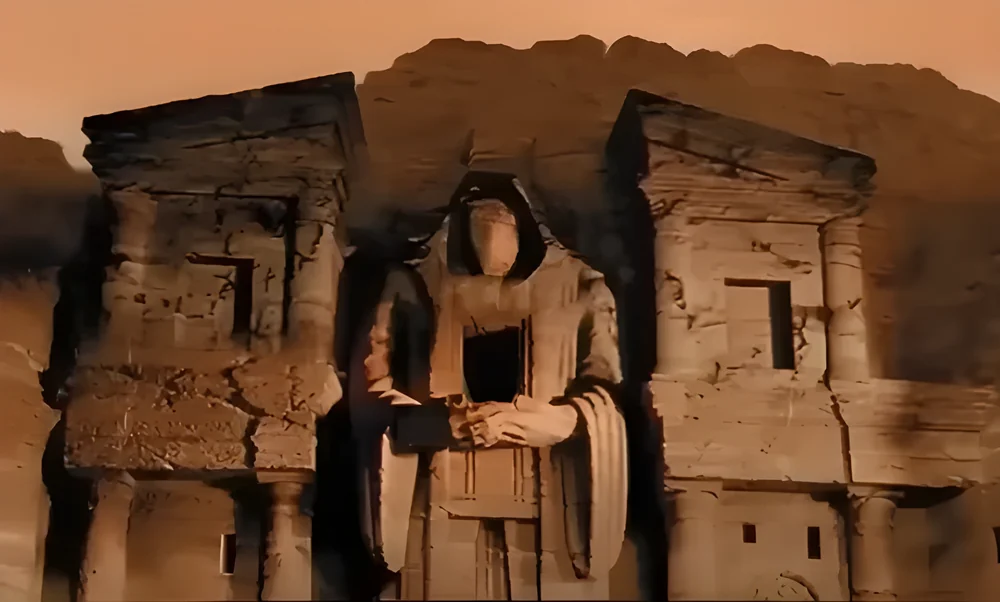
Mahdi
Mahdi was the Fremen name for the savior foretold in their messianic legend, the one who would lead them to paradise and be aware of things others could not see. The prophecy, seeded by the Missionaria Protectiva, settled upon Paul Atreides after he joined the Fremen of Arrakis.
Qizarate: the Priesthood of Muad'Dib in Dune Messiah
The Qizarate was the priesthood of Paul Atreides's religion, Fremen priests who turned Muad'Dib into a god and carried his faith across the Imperium behind the armies of the jihad. By Dune Messiah it had become a wealthy bureaucracy that Paul himself could barely steer, and some of its leaders plotted his death.
Arrakis
Arrakis, known as Dune and later as Rakis, was a harsh desert world in the Canopus system and the only natural source of the spice melange. Home to the Fremen and the sandworms, it became the seat of the Atreides empire and the center of the known universe.
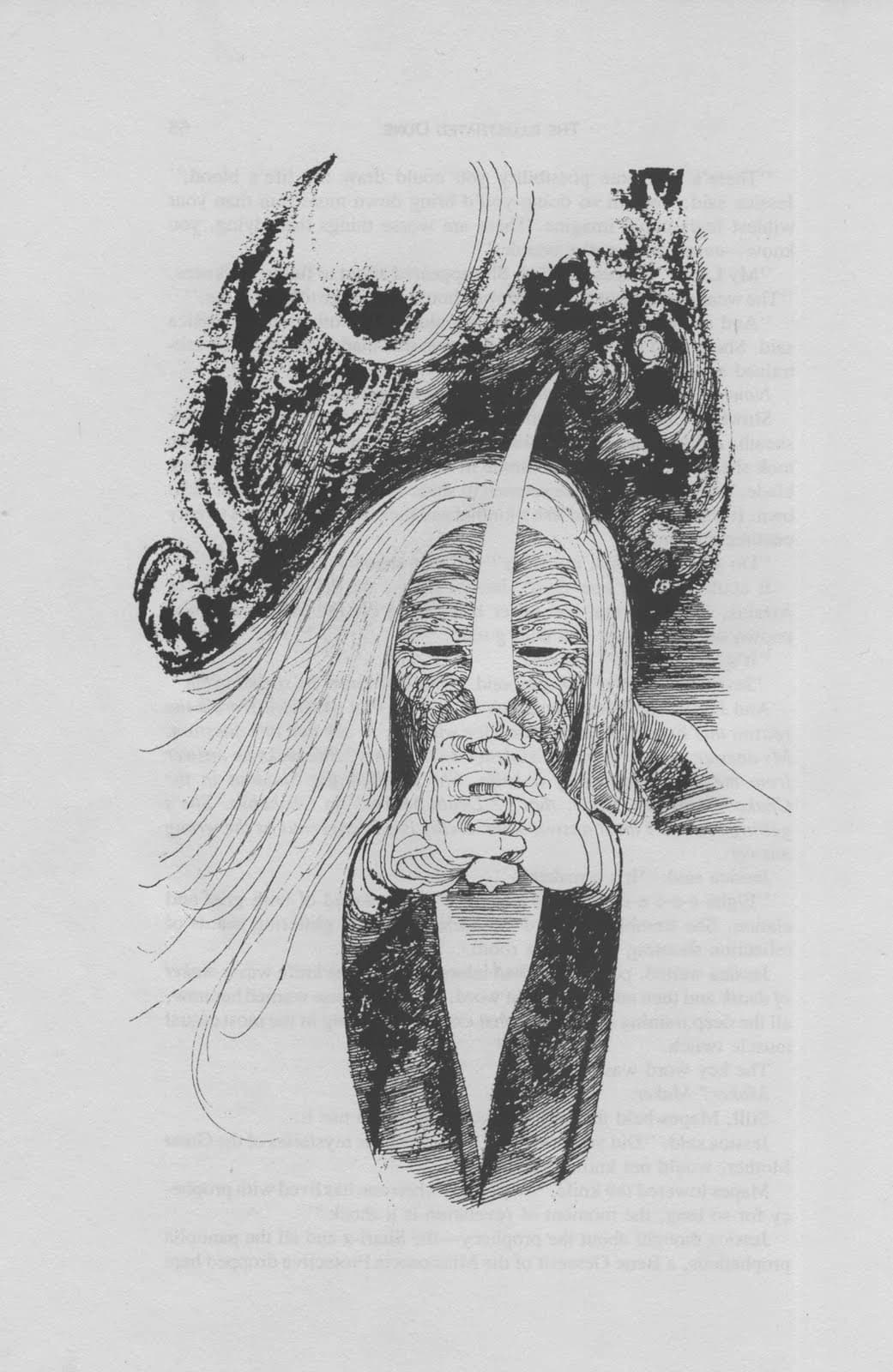
Crysknife
The crysknife was a knife made from the tooth of a sandworm, the primary weapon of the Fremen of Arrakis. Milky white and double-edged, it was sacred to its bearers and could not be sheathed once drawn until it had drawn blood.
Fremen
The Fremen were a culture of humans descended from the Zensunni Wanderers who made the desert planet Arrakis their home. Hardened by water scarcity and generations of persecution, they became the finest fighters in the Known Universe and the foot soldiers of Paul Atreides and his jihad.

Jamis
Jamis was a fierce Fremen warrior of Sietch Tabr who challenged the young Paul Atreides to ritual combat when Paul and his mother first sought sanctuary among the Fremen. His death won Paul his sietch name and his place among the tribe.
Mentioned in9 entries
Are the Bene Gesserit Evil?
The Bene Gesserit test children with poison, breed people like livestock and plant false prophecies on whole planets. They also spend ten thousand years trying to keep humanity alive. Here is what Frank Herbert's novels show on both sides, and how to read it.
Every Name and Title of Paul Atreides: Usul, Muad'Dib, Kwisatz Haderach and More
Paul Atreides picks up a new name almost every time his life changes. Here is each one, what it means, who gave it to him and where it turns up in Frank Herbert's books.
Is Paul Atreides Evil? Hero, Villain and What Frank Herbert Intended
Paul doesn't want the holy war fought in his name, and he lets it happen anyway. Here's what the books say he did, what he tried to do instead, and what Frank Herbert said he meant by it.
Mahdi
Mahdi was the Fremen name for the savior foretold in their messianic legend, the one who would lead them to paradise and be aware of things others could not see. The prophecy, seeded by the Missionaria Protectiva, settled upon Paul Atreides after he joined the Fremen of Arrakis.
Missionaria Protectiva
The Missionaria Protectiva was the Bene Gesserit program for seeding protective myths and prophecies among primitive cultures, so that a Sister in danger could later cast herself as a foretold figure and turn local belief to the Sisterhood's advantage.
Paul Atreides
Paul Atreides was the last Duke of House Atreides and the prophet Muad'Dib of the Fremen. The long-awaited Kwisatz Haderach of the Bene Gesserit, he toppled Emperor Shaddam IV, founded the Atreides Empire, and unleashed a jihad across the Known Universe before walking blind into the desert.
Qizarate: the Priesthood of Muad'Dib in Dune Messiah
The Qizarate was the priesthood of Paul Atreides's religion, Fremen priests who turned Muad'Dib into a god and carried his faith across the Imperium behind the armies of the jihad. By Dune Messiah it had become a wealthy bureaucracy that Paul himself could barely steer, and some of its leaders plotted his death.
Reverend Mother in Dune: the Spice Agony and Other Memory
A Reverend Mother is a woman who has survived the spice agony, changing a poison inside her own body and waking to the memories of her female ancestors. The Bene Gesserit use the title for their senior Sisters, and the Fremen use it for the wise women of their sietches.
Why Did Paul Atreides Start the Jihad?
Paul didn't want the jihad. He foresaw it for most of Dune, searched for a way to stop it, and decided it would happen even if he died. Once he was Emperor he let it run, because every future he could see without it was worse.
Get new articles in your inbox
No spam. New lore drops, canon conflicts, and deep dives only when they’re worth reading.
Some links on Lore Fortress are affiliate links. If you buy through them we earn a small commission at no extra cost to you.