Astral Form: the higher existence of the gods
The Astral Form was a rare state in which a god existed without a physical body, appearing as a higher, transcendent version of themselves. Only Athena and, briefly, Zeus ever achieved it, and each reached it by a different road, she through selfless sacrifice and he through the evil of Fear.
The Astral Form was a state that a god could take on under very particular circumstances, an existence without a physical body in which the god appeared as a higher, transcendent version of themselves. In all the recorded history of the Greek and Norse worlds only two beings ever reached it. Athena attained it fully, through an act of selfless sacrifice that carried her beyond death itself, and Zeus held an incomplete version of it for a brief and desperate moment at the end of his life. Both revealed the state to the same witness, Kratos, the Spartan who had killed them both. The name itself is a fan label; the games never use it. (God of War II; God of War III; God of War (2018))
The Nature of the Higher Existence#
The Astral Form was not a fate that awaited gods in the ordinary course of death. When gods died they passed into the afterlife like any other soul, or ceased altogether. The astral state was something apart, a transcendence in which a god shed the restraints of the physical body yet continued to appear, speak, and act among the living. Athena described her own condition as a higher form of existence, a state above everyone else, and it granted her more than mere survival. Freed from her body, she claimed to see truths where she had not before. (God of War III)
The paths into the state differed as sharply as the two gods who walked them. Athena crossed over through sacrifice, dying so that another might live. Zeus was dragged partway into it by the evil Fear, which his soul seized and wielded after his body had been run through. His form was incomplete and could not endure; hers was whole and lasting. The existence of the state did not appear to be common knowledge among the gods of any pantheon. Its ascension seemed bound to genuine selflessness, a price that the proud and ageless Olympians and Aesir were rarely willing to pay, and so the form remained unknown to all but Athena and the Spartan who saw it with his own eyes. (God of War III)
Athena's Ascension#
Athena died at the climax of Kratos's duel with Zeus, throwing herself between Kratos and Zeus at the moment the Spartan drove the Blade of Olympus at the king of the gods. The thrust meant for her father took her instead, and she died in Kratos's arms. That death was not an ending. Her sacrifice raised her into the higher existence, and when Kratos next saw her she stood before him without a physical body, radiant and changed. (God of War II)
The reunion came after Kratos fell into the River Styx during his final war against Olympus. The souls of the river had attacked him, draining his power and ruining the Blades of Athena that he carried. On the banks of the Styx, Athena's astral form appeared to him, took the corroded weapons, and remade them as the Blades of Exile. She showed in that form the power of flight, and she could appear and vanish at will. Nor was she visible to Kratos alone; Pandora also saw and heard her during the assault on the mountain. (God of War III)
The Guide on the Road to Olympus#
Throughout the last war of the Greek age, Athena's astral form served as Kratos's counselor. Where the living Athena had defended Olympus and her father, the transcended Athena chose to help the Spartan destroy them, claiming that her new sight had shown her what she could not see in life. She set him on the path to the source of Zeus's strength, the Flame of Olympus, naming it the means by which the king of the gods could be destroyed. Her guidance carried Kratos through the Underworld and up the slopes of the mountain, to the final confrontation that ended the reign of the Greek gods. (God of War III)
Zeus and the Evil of Fear#
Zeus's brush with the astral state came at the very end of his life. In the last battle atop Olympus, Gaia returned to crush father and son together, and Kratos drove the Blade of Olympus through Zeus and into the Titan's heart, killing her and, it seemed, the king of the gods with her. But when Kratos pulled the blade from his father's corpse, Zeus's soul rose from the body in an incomplete astral form, armed with the evil Fear, and fell upon the Spartan in a final attempt to destroy him. (God of War III)
The assault was unlike any battle of arms. The astral Zeus stripped away nearly all of Kratos's weapons and relics, sparing only the Blades of Exile, the Blade of Olympus, and the Boots of Hermes, and sought to trap the Spartan inside his own tormented mind, strangling him beneath the weight of his guilt. What saved Kratos was a power buried deeper than the guilt itself. The Power of Hope, drawn from Pandora's Box when he had first opened it to kill Ares, had lain trapped within him under the failures of his past. In the prison of his mind, guided by Pandora's voice, Kratos forgave himself for the deaths of his wife, his child, and Athena, and the power rose in him at last. With Hope in his hands he broke free of the astral form and struck it, driving the spirit back into its body. Kratos then cast his blades aside, pinned Zeus to the rock, and beat him to death with his bare hands as Fear left him. The death of the king of the gods burst over Greece in a cataclysm that threw the land into chaos and ended the rule of Olympus forever. (God of War III)
Hope Denied#
In the ruin that followed, Athena's astral form came to Kratos one final time. She congratulated him for freeing mankind from the bondage of Olympus and asked him to surrender the power he had taken from the box, claiming the world was ready to hear her message. Kratos answered that the box had been empty. Athena, disbelieving, then understood the truth: the Power of Hope had entered Kratos when he first opened the box against Ares and had lived inside him ever since, buried beneath his guilt. (God of War III)
Kratos refused to hand that power to her. Looking on the devastation he had caused and the sacrifice of Pandora, and in defiance of the goddess as much as in penance, he drove the Blade of Olympus into his own body, releasing Hope out into the world for mankind rather than for Athena's keeping. Embittered, she pulled the blade from him, told him he had disappointed her, and left him to bleed upon the stone. Kratos did not die. He crawled from the mountain, and in time he traveled far to the north, into the lands of Scandinavia, where he began a new life in Midgard. (God of War III; God of War (2018))
The Apparition in Midgard#
Many years later, in the frozen wilds of the north, the astral form appeared once more, or something wearing its likeness did. When Atreus fell gravely ill, his cure lay in Helheim, a world so cold that the ice of the Leviathan Axe was useless there and no fire could be kindled to survive it. Kratos was forced to return home for the one weapon that could endure that cold, the Blades of Chaos he had buried beneath the floor of his house. On the boat crossing, a storm rose about him, and at the far end of the vessel stood Athena, silent, smiling at the Spartan. (God of War (2018))
She appeared again in the doorway of his home as he lifted the blades from beneath the floorboards. However much time had passed, she told him, and however far he traveled, he could not change what he was. He was pretending, she said, to be a teacher, a husband, a father, when he was only a monster. Kratos agreed. But he answered that he was her monster no longer, and walked through her, and she was gone. (God of War (2018))
Whether the figure was truly the goddess remained uncertain. Mimir, who accompanied Kratos through those journeys, never saw or heard anyone besides himself and the Spartan. The vision may have been no more than the shape of Kratos's guilt, conjured in the moment he took up the Blades of Chaos for the first time since coming to Midgard. The games say nothing further of Athena herself, and her higher existence, the only complete Astral Form ever attained, passes out of their record. (God of War (2018))
Frequently asked questions
- What was the Astral Form in God of War?
- The Astral Form was a rare state in which a god continued to exist and act without a physical body, appearing as a higher, transcendent version of themselves. It was all but unknown even among the gods, and only Athena and, for a short while, Zeus ever attained it.
- How did Athena achieve her Astral Form?
- Athena died taking the thrust of the Blade of Olympus that Kratos had meant for Zeus. That selfless sacrifice carried her into what she called a higher form of existence, freeing her from her body and letting her see truths she had not seen in life.
- How was Zeus's Astral Form different from Athena's?
- Zeus's form was incomplete and temporary. After his body was impaled through Gaia's heart, his soul rose wielding the evil Fear and tried to destroy Kratos by trapping him inside his own tormented mind. Kratos broke free with the Power of Hope and forced the spirit back into its body, where Zeus was killed for good.
- Did Athena appear again after the fall of Olympus?
- A figure resembling her astral form appeared to Kratos in Midgard many years later, mocking him as a monster pretending to be a husband, father, and teacher. Mimir neither saw nor heard anyone, and whether the apparition was the goddess herself or a phantom of Kratos's guilt was never settled. Athena had not been heard from in many years.
Sources
- GameGod of War II, Santa Monica Studio, 2007
- GameGod of War III, Santa Monica Studio, 2010
- GameGod of War (2018), Santa Monica Studio, 2018
Spotted a factual error or a primary source we missed? Email a correction. Every flagged claim gets reviewed.
Followed from this entry
The Afterlife
The Afterlife was where the dead passed, called the Underworld among the Greeks and Helheim among the Norse. Existing as physical places as much as spiritual ones, the various afterlives were ruled by powerful gods who judged the dead and shepherded their souls, with a different realm awaiting those who died within each mythology.
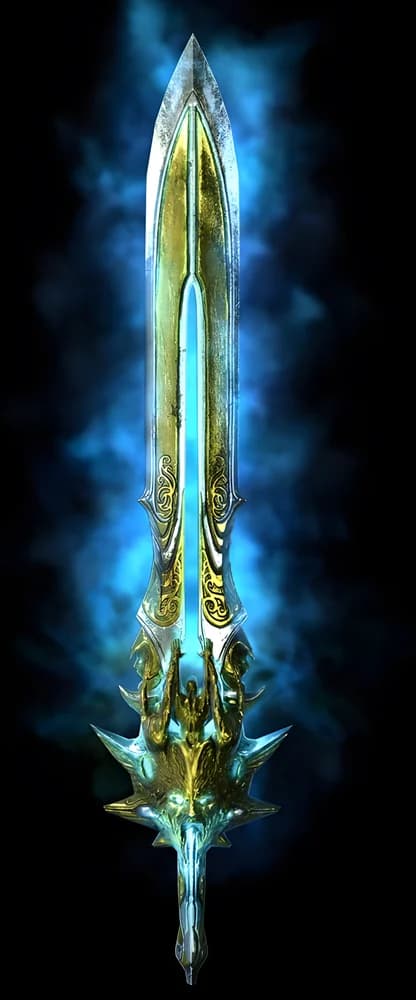
Blade of Olympus: Zeus' god-killing sword
Zeus forged the Blade of Olympus from the heavens and the earth to banish the Titans to Tartarus. It could kill gods and Titans, and it killed Zeus himself.
Blades of Chaos: chained to Kratos' arms
The Blades of Chaos were forged in the Underworld for Ares, who seared their chains onto Kratos' forearms. They burn with the fire of Tartarus.
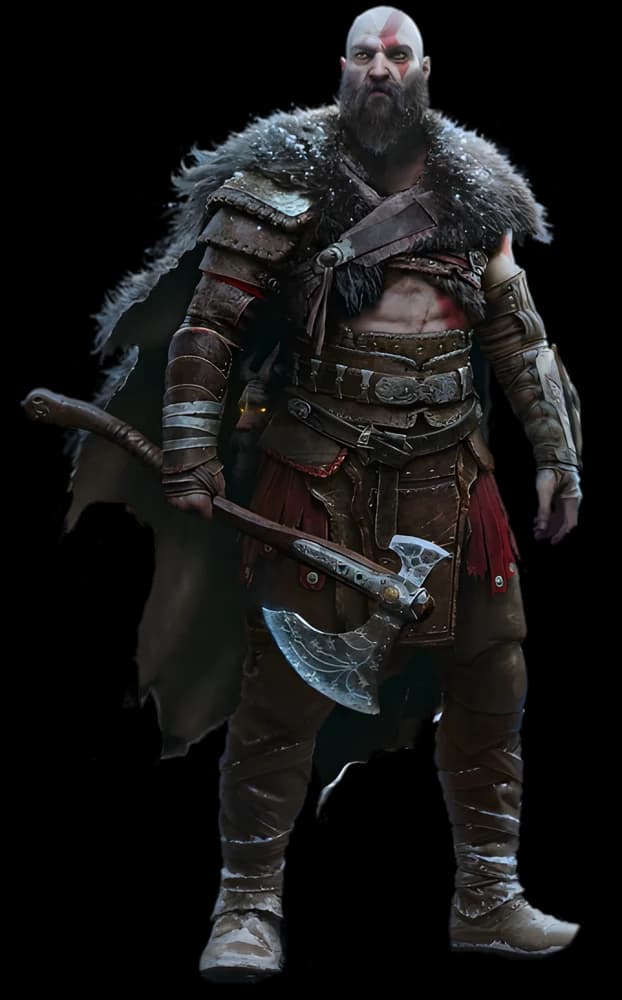
Kratos
Kratos was the demigod son of Zeus who rose from a Spartan general to the Greek God of War, destroyed the pantheon of Olympus in a quest for vengeance, and then began again in the Norse realms as a father seeking to leave his bloody past behind.
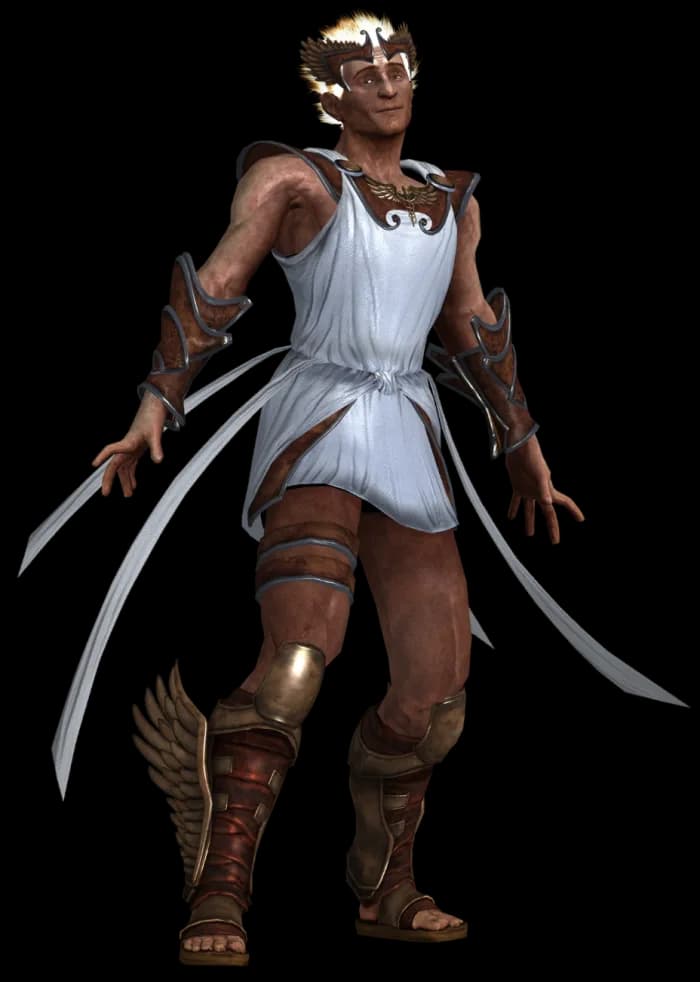
Boots of Hermes: the Winged Boots Kratos Cut from Hermes in God of War III
The Boots of Hermes are the messenger god's winged greaves, which Kratos takes by cutting off Hermes's legs in God of War III. They let him sprint, dash and run on certain walls, and they are one of the few things Zeus fails to take from him.
River Styx: the river of hatred beneath Greece
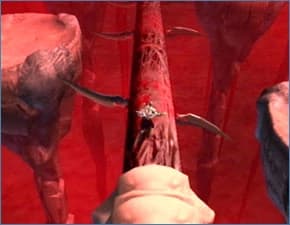
The River Styx was the great river of the Greek Underworld, a barrier that killed the living on contact and carried the souls of the dead toward judgement. Charon ferried across it, the Path of Hades bridged it, and Kratos crossed, fell into and finally swam it more times than any mortal.
Mentioned in2 entries
Boots of Hermes: the Winged Boots Kratos Cut from Hermes in God of War III
The Boots of Hermes are the messenger god's winged greaves, which Kratos takes by cutting off Hermes's legs in God of War III. They let him sprint, dash and run on certain walls, and they are one of the few things Zeus fails to take from him.
Head of Helios: the Severed Lantern Kratos Carried in God of War III
The Head of Helios is the sun god's own head, torn off by Kratos in God of War III and carried as a lantern. It lights dark places, uncovers hidden paths and chests, and blinds anything it shines on, Cronos included.
Get new articles in your inbox
No spam. New lore drops, canon conflicts, and deep dives only when they’re worth reading.
Some links on Lore Fortress are affiliate links. If you buy through them we earn a small commission at no extra cost to you.